



9,836

Mr. Will Wong
Official Fan Page for Toronto Entertainment & Food Personality Mr. Will Wong, multi-award winning Blogger and Photographer.
X: @mrwillw
Instagram +TikTok: mrwillwong

PROJECT HAIL MARY is now in theatres. Some highlights from Rocky's Light Show last night, one of three which took place around the world.![]()
![]() www.instagram.com/reel/DWGpM9YhTnx/?igsh=MXZoaGF1MGo4M3huZQ==
www.instagram.com/reel/DWGpM9YhTnx/?igsh=MXZoaGF1MGo4M3huZQ==
Toronto! Are you ready for a light show? In celebration of PROJECT HAIL MARY, come on out to check out Rocky's Global Light Show Thursday night, between 9-10 PM along East Toronto Harbour!![]()
![]() Details: www.mrwillwong.com/firstlook-rockys-global-light-show-toronto-for-project-hail-mary
Details: www.mrwillwong.com/firstlook-rockys-global-light-show-toronto-for-project-hail-mary
Enter for a chance to win passes to an Advance Screening of MAYA AND SAMAR in Toronto and Montreal!![]()
![]() Details:
Details:![]() www.mrwillwong.com/mayaandsamar-2
www.mrwillwong.com/mayaandsamar-2![]()
![]() "Like" this post and tell us which city in the comments. Tag a friend you're taking with you!
"Like" this post and tell us which city in the comments. Tag a friend you're taking with you!![]()
![]() Note: Do not respond to third parties telling you that you've won. This is not us.
Note: Do not respond to third parties telling you that you've won. This is not us.
Enter for a chance to win passes to Toronto, Montreal, and Calgary to see THEY WILL LKILL YOU! Screenings are March 25, 2026.![]()
![]() "Like" this post for an entry, comment your city, and tag a friend in the comments you're bringing. Multiple entries allowed.
"Like" this post for an entry, comment your city, and tag a friend in the comments you're bringing. Multiple entries allowed.![]()
![]() Details: www.mrwillwong.com/theywillkillyou
Details: www.mrwillwong.com/theywillkillyou![]()
![]() Warner Bros. Pictures Canada release THEY WILL KILL YOU March 28, 2026.
Warner Bros. Pictures Canada release THEY WILL KILL YOU March 28, 2026.![]()
![]() Note: Do not respond to third party comments telling you that you've won. This is not us.
Note: Do not respond to third party comments telling you that you've won. This is not us.
#SUNDANCE: “THE WORST PERSON IN THE WORLD”
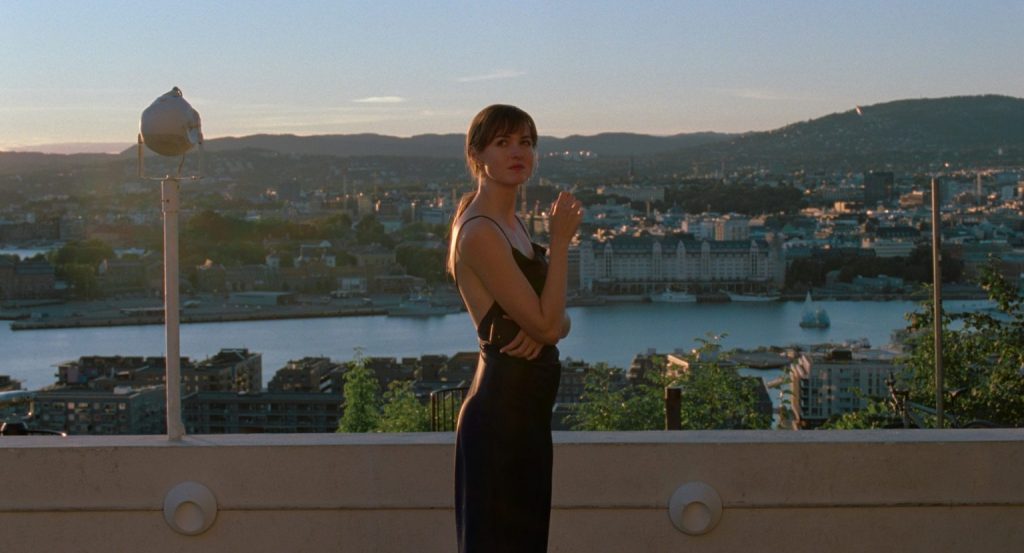
By Mr. Will Wong
While it already has made waves at Cannes and TIFF, Norwegian Writer/Director Joachim Trier brings the brilliant finale to his acclaimed “Oslo Trilogy” to Sundance. The Romantic Dramedy is shortlisted to represent Norway at the upcoming Academy Awards for Best International Feature Film.
Trier continues to explore life today in this Norwegian capitol and at the center of the story is Julie (Renate Reinsve in her award-winning performance), an almost-thirty woman still figuring it out. We meet her as a medical student, who then decides she wants to study Psychology. She wants to be a Photographer. And then a Writer. She meets Aksel (Anders Danielsen Lie) known for his politically-incorrect comic books, and while he is some 15 years older than she, they strike a deep connection and fall in love. As their relationship progresses, there are some points of contention. Aksel has figured out who he is, though Julie really hasn’t. He wants children, though she isn’t quite there yet. And more so, Aksel has a perspective that has come with age that makes Julie feel diminished. Julie meets Elvind (Herbert Nordrum) and they fall in love, filling voids in their own current respective relationships. But as Aksel‘s world begins to unfold, Julie still finds him on her mind and she must confront herself as her life reaches a crossroad.
The performances from our two leads feel so remarkably effortless. We feel we are getting all of Julie in Reinsve‘s thoughtful work, matched by Lie who takes Aksel through a range of emotions and questions. I already can envision adaptations of the Film in other languages with Actors chomping at the bit to take on these rich, complex roles.
THE WORST PERSON IN THE WORLD is gorgeous, subtle and thought-provoking storytelling that equally captures the lightness and humour of falling in love. At once, it dives deep into the pain of soul searching and falling out of love as well, while considering life since #MeToo and into the pandemic. Trier has gifted us with something that is both now and timeless.
THE WORST PERSON IN THE WORLD screens at Sundance:
- JAN. 20 11:45PM EST Available Until Jan. 21 2:45AM EST
- SECOND SCREENING JAN. 21 10:00AM EST Available Until Jan. 24 10:00AM EST
#SUNDANCE: “NANNY”
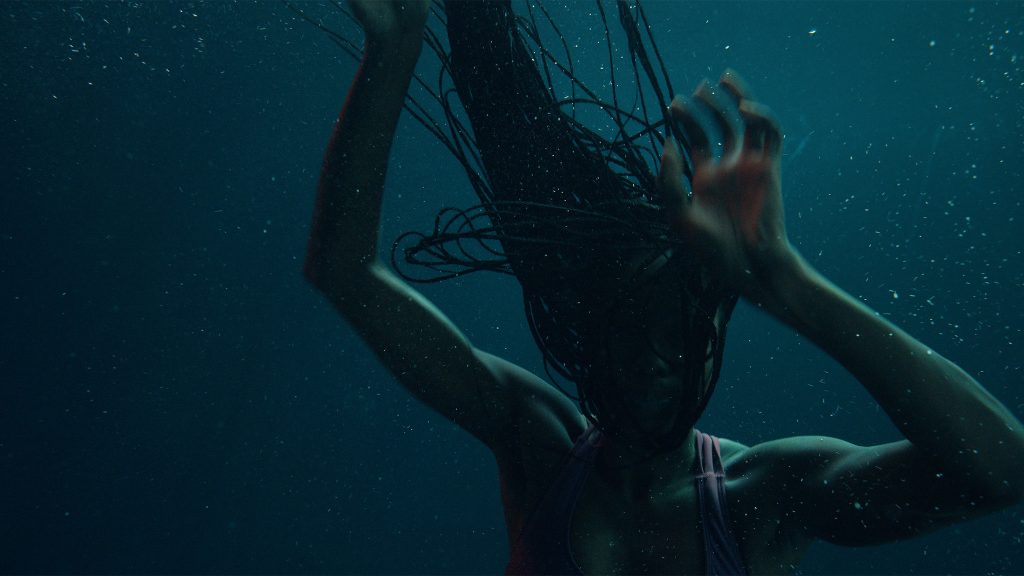
By Amanda Gilmore
Writer-Director Nikyatu Jusu’s Feature debut is a heartfelt love letter to immigrant women who sacrifice everything to give their children a better life.
Aisha (Anna Diop), an undocumented Senegalese immigrant, lands a job as a nanny for a wealthy Manhattan couple. As she spends her days taking care of their daughter Rose (Rose Decker), she is haunted by the absence of the young son she had to leave behind in Senegal. Aisha hopes her new job will afford her the chance to bring him to the U.S. and share the life she’s piecing together.
Nanny is a Horror film about the American Dream. However, Jusu has created a film that functions on many levels. It’s a dramatic character study of Aisha while incorporating the genre elements. In doing so, she’s created a wholly unique genre film. Jusu and Diop work seamlessly together to create an empathetic portrait of the immigrant experience. Diop gives a nuanced performance and is a force as Aisha. She evokes the longing, guilt and anger for the life she is living in order to carve out a better one for her son.
Additionally, Nanny excels at showing the essential work these marginalized women perform. Jusu achieves this through the relationship between Rose’s mother Amy (Michelle Monaghan) and Aisha. It’s clear the privileged Amy is able to advance in her career because of the help Aisha provides. In doing this, Jusu shows how these women are essential to the functioning of American society.
Nanny’s genre aspects come from visions Aisha sees both while sleeping and awake. Aisha becomes informed that these visions are magic, however, she doesn’t believe in magic so she ignores their warnings. These moments allow for the horror aspects to come through.
Nanny screens virtually at Sundance:
Premiere: Jan. 22 at 1:45PM EST
Second Screening: Jan. 24 at 10AM EST (available for 24hrs)
#SUNDANCE: “MASTER”
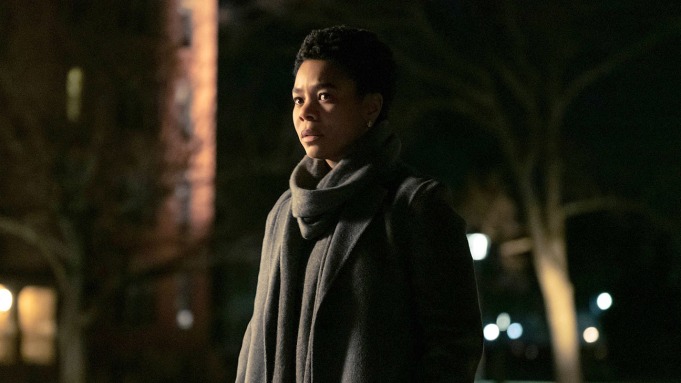
By Amanda Gilmore
Master follows three Black women at an elite New England university, Ambrose College, built on the site of a Salem-era gallows hill. Gail Bishop (Regina Hall) has just been instated as Master, first-year student Jasmine Moore (Zoe Renee) is trying to find her place, and literature professor Liv Beckman (Amber Gray) attempts to get her tenure. The three women navigate the politics and privilege of the campus and encounter increasingly terrifying manifestations of the school’s haunted past and present.
Writer-Director Mariama Diallo crafts an assured, compelling Feature debut. Like the finest of Psychological Horrors, Master excels in its social critique. It examines the racism and classism on campuses, however, it strives in connecting what happens at Ambrose College to everywhere. Diallo achieves this through her steady direction and precise Script. Additionally, she’s gifted audiences with a fresh take on the genre.
Diallo entwines the past and the present. The past for the history of black students dying in the room to which Jasmine has been assigned, and the present for the racism of the current students and faculty. In doing so, Diallo expertly toys with our minds making us question and guess until the very end. Additionally, she creates a chilling watch from start to finish. With expert use of lighting, sound and production design Diallo creates an eerie atmosphere interpolated with unsettling, frightening moments.
Then there are the powerful performances from this Cast. Hall gives a commanding performance as the Master battling with what she should and shouldn’t do and believe. Upcoming talent Renee gives a captivating performance as a young woman trying to find her place. Then there’s Gray who gives the perfect amount of mystery to Liv, allowing for some psychological aspects of the Script to thrive.
Master will be released on Prime Video March 18, 2022.
Master screens virtually at Sundance:
Premiere: Jan. 21 at 8:30PM EST
Second Screening: Jan. 22 at 10AM EST (available for 24hrs)
#SUNDANCE: “KLONDIKE”
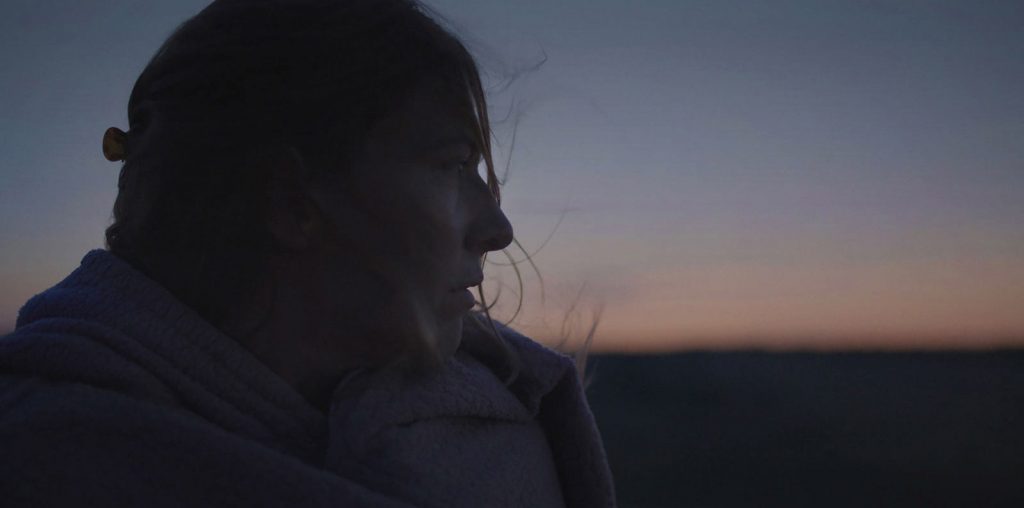
By Amanda Gilmore
Its July 2014, Irka (Oxana Cherkashyna) and Tolik (Sergey Shadrin) live in the Donetsk region of eastern Ukraine near the Russian border. The region was disputed territory in the early days of the Donbas war. As they anxiously anticipate the birth of their first child, the crash of flight MH17 elevates tensions in their village.
This is one of the many films at this year’s Festival that is timely. As each day goes by, we hear more about the escalating tensions on the Ukraine-Russian border. Then comes this film centering on the matter, but set a few years back. Writer-Director Maryna Er Gorbach’s skillful direction allows for demanding takes. We watch as a bomb hits Irka and Tolik’s house, then we take a long pan through the remainder of the home and the damage left behind. This gives the Film a feeling of theatre, a minute-by-minute account of what our characters are living. Making this a film that is relevant and it feels immediate through its artistry.
At the heart of KLONDIKE is its message of resilience in the most extreme circumstances. Gorbach has dedicated the film to women and it’s clear why. Irka is the one character who attempts to stay out of the forbidding tension surrounding her home, however, she’s forced to live within it. She does all this with the added pressure of carrying her first-born child. Cherkashyna is outstanding and captures the tenacity of Ikra. With limited dialogue and long-takes Cherkashyna shines with subtle, restrained actions that speak volumes.
KLONDIKE is heartbreaking film carried by a powerful performance at its center.
KLONDIKE screens virtually at Sundance:
Premiere: Jan. 21 at 2:15PM EST
Second Screening: Jan. 23 at 10AM EST (available for 24hrs)
#BOXOFFICE: “SPIDER-MAN” RECLAIMS TAKES TOP SPOT AGAIN IN TIGHT FINISH
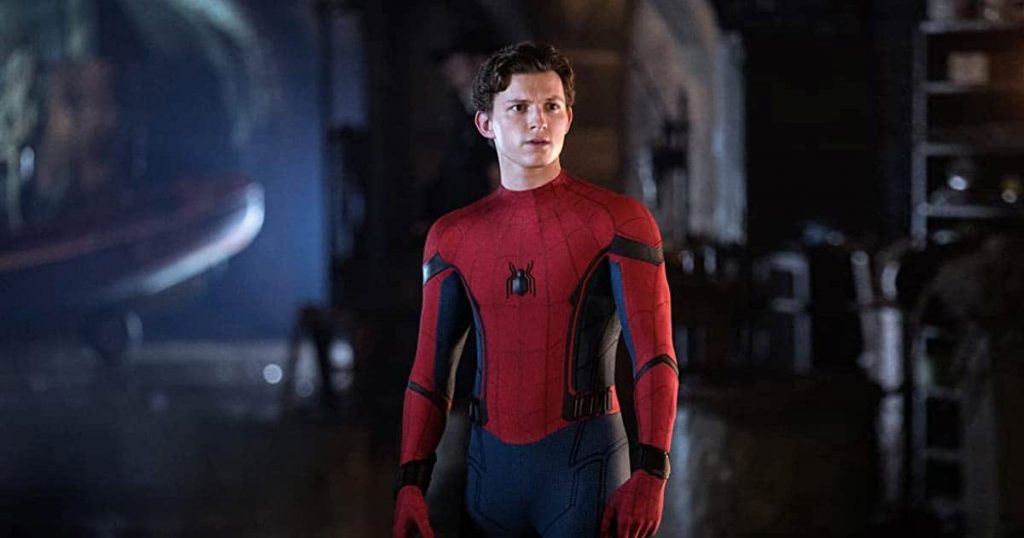
The resilient SPIDER-MAN: NO WAY HOME reclaims the #1 spot once again at the Box Office with $13.5 million from 3,705 theatres across North America for Sony Pictures, a total run of $720 million thus far.
SCREAM just misses a repeat at the top, bringing-in $11.7 million from 3,666 theates for Paramount Pictures. Over two weekends it has made $50.6 million.
SING 2 gets third with $8.2 million from 3,434 theatres for Universal Pictures, bringing its run to $128.2 million domestically.
REDEEMING LOVE opens in 1,903 theatres for Universal Pictures and debuts in fourth with $4 million. The Romance set against the backdrop of the California Gold Rush, gets 11% on the Tomatometer. It can be seen now where theatres are open in Canada.
In fifth is THE KING’S MAN wit $1.7 million for 20th Century Studios, a run of $31 million. The Film has been slotted for a February 18th release on Disney+.
#SUNDANCE: “CALL JANE”
By Mr. Will Wong
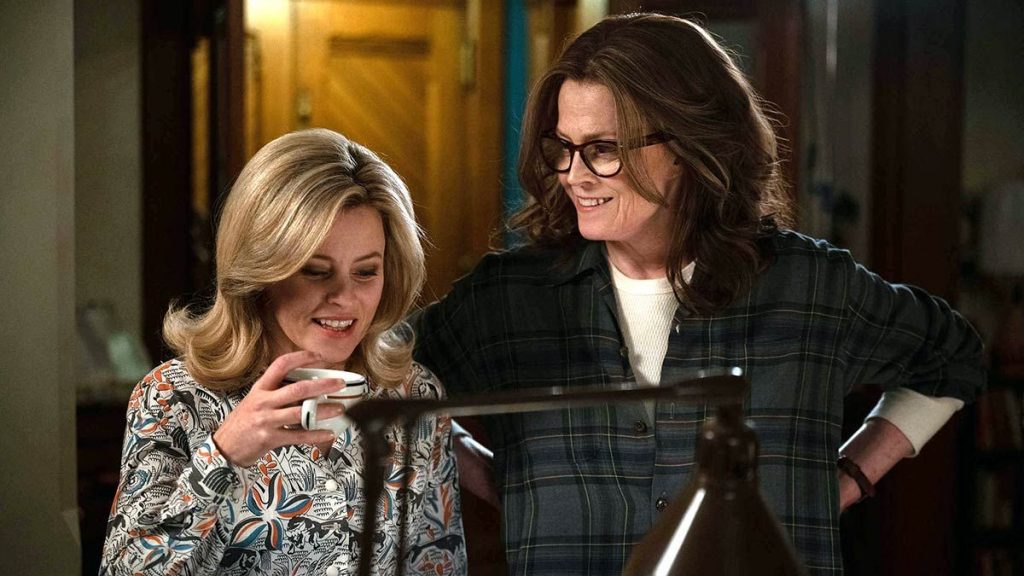
Set in the late ’60s as Chicago is about to witness a major political upheaval sparked by the assassination for Martin Luther King Jr.. CALL JANE tells the story of Joy (Elizabeth Banks), whom after becoming pregnant, faces a life-threatening condition. She decides to get an abortion, but is faced with great obstacles. She is able to find the support of the Jane Collective, an underground group of women who support one another in their fight for women’s rights and safer abortions. We see in Joy’s own abortion how risky the procedure is. Directed by Phyllis Nagy, whom wrote the Screenplay for Carol, the Film takes us back to a time of revolution when women demanded to be heard in their right to make decisions about their own bodies, and took matters into their own hands when they weren’t being heard.
The Film explores the dynamics of Joy’s life at home in her marriage to lawyer husband Will (Chris Messina) and how her growing involvement with the Jane Collective begins to present challenges in their relationship. This at a time when a wife is expected to be home for her family unconditionally. We also see bonds form in the collective among these women united in their values and a key figure in this is charismatic Virginia (Sigourney Weaver). From here, we really see Joy begin to find her greatest purpose as her world expands and mind opens.
Joy is our guide into the era in which the story is set and the secretive nature of the work that the Jane Collective do. In her, we feel and see the obstacles women faced and the weight they bore at the time (and still do), and Banks delivers an engaging, accessible performance in the lead role. This Film should makes a timely statement in the ongoing dialogue about women’s reproductive rights and deserves to be seen.
See CALL JANE at Sundance as follows:
- JAN. 21 7:45PM EST Available Until Jan. 21 10:45PM EST
- SECOND SCREENING – JAN. 22 10:00AM EST Available Until Jan. 25 10:00AM EST
#SUNDANCE: “NOTHING COMPARES”

By Amanda Gilmore
This in-depth Documentary examines Sinéad OʼConnorʼs phenomenal rise to worldwide fame and how she used her voice at the height of her stardom, leading to her being exiled from the pop mainstream.
Director Kathryn Ferguson focuses on the years 1987 to 1993, when O’Connor made headlines repeatedly. This spans the years where O’Connor was establishing herself as an artist up to the moment on SNL that changed everything. Ferguson boldly makes this an archival footage Documentary with a new interview with O’Connor. Thus, reminding us of her nonconformist personality and passionate views while allowing us to hear her reflection decades later.
Nothing Compares is O’Connor’s story is told through a contemporary feminist lens. Ferguson draws the parallels between the ’80s and ’90s to today. What emerges is a study of a woman before her time. Today we have pop superstars who freely state their political and social views, and are adored for it. However, in the early ’90s, the world persecuted O’Connor for her’s.
Overall, Nothing Compares is a bold documentary just like its subject. Through this story comes themes of abuse, mental health, misogyny and more. Additionally, it works as a critique of how the views within a society and the media change. These changes are better for today’s world, but they’ve still hindered those of the past.
Nothing Compares screens virtually at Sundance:
Premiere: Jan. 21 at 8PM EST
Second Screening: Jan. 23 at 10AM (available for 24hrs)
#SUNDANCE: “892”

By Mr. Will Wong
On July 7, 2017, former Lance Corporal Bryan Brown-Easley (John Boyega) was shot to death after barricading himself inside a bank where he held two bank workers hostage, pretending to carry a bomb. After an honourable discharge from the Marines, he had been struggling to get by and after a payment of $892.34 he was due from the Department of Veteran Affairs was withheld after it was used to pay off a garnishment from a past college loan, he decided to take matters into his own hands. He wasn’t looking to take the bank’s money, he was looking for the money has was due and was willing to risk his life to make a statement.
Directed and written by Abi Damaris Corbin, 892 is a riveting recounting of the events leading to Brown-Easley‘s death, that day almost five years ago. Corbin gives us a sympathetic look at the PTSD, Schizophrenia and Paranoia our fallen hero was going through, resulting in his demise. We also get a sense of what Brown-Easley meant to others around him. We meet his ex-wife, the young daughter he left behind, a bank worker (Nicole Beharie) at his mercy, and an empathetic Chief in Eli Bernard (the late Michael Kenneth Williams in his final role) who also was a former veteran, trying to talk him off the ledge. The Film is tight, suspenseful but most importantly a tragic education about a broken system.
Boyega is unbelievable in this career-defining performance. He is driven, terrifying and at once raw and vulnerable, particularly in scenes with Brown-Easley‘s daughter, Kiah (London Covington) re-align us with a sense of his moral compass. This is sublime work we won’t soon stop talking about and comparisons to a younger Denzel Washington are unavoidable. We cannot wait for the world to witness this.
892 screens at Sundance as follows:
JANUARY 21, 2022 1:30 PM ET
JANUARY 23, 2022 10:00 AM ET
#SUNDANCE: “LIVING”

By Amanda Gilmore
Williams (Bill Nighy) is a veteran civil servant and bureaucratic cog in the rebuilding of Britain post-WWII. He spends his days pushing paper and simply existing until he is diagnosed with a terminal illness. With an estimated six-months remaining, Williams goes on a quest to feel what it’s like to live again.
This Film is a British remake of Akira Kurosawa’s Ikiru (To Live) and is exquisitely adapted by Nobel and Booker Prize-winning Author Kazuo Ishiguro. Ishiguro’s precisely-crafted Screenplay is set in a postwar London and Director Oliver Hermanus uses the era’s cinematic aesthetic to bring this story to the screen. However, even though Living is set during this period Ishiguro, Hermanus and Nighy make it resonate today.
Nighy brilliantly portrays Williams as a man who stopped living due to the repetitiveness of his life and simply began existing. He’s powerful in quiet moments of contemplation about his remaining days. These moments are contrasted with the vibrant scenes Williams shares with Margaret (Aimee Lou Wood). In her, he sees someone who lives life every day. Lou Wood is a bright and energetic force and commands the screen.
Overall, Living is a touching film about a man staring at death and evaluating what he wants to do for his remaining days. Additionally, it touches on the impact we leave on our family and society. It manages to accomplish this while never becoming overly sentimental. There are times were it drags but it makes up for it with a powerful Cast, an expert screenplay and a directing style that’s unique and innovative.
Living screens virtually at Sundance:
Premiere: Jan. 21 at 2PM EST
Second Screening: Jan. 23 at 10AM EST (available for 24hrs)
#SUNDANCE: “RIOTSVILLE, USA”
By Amanda Gilmore
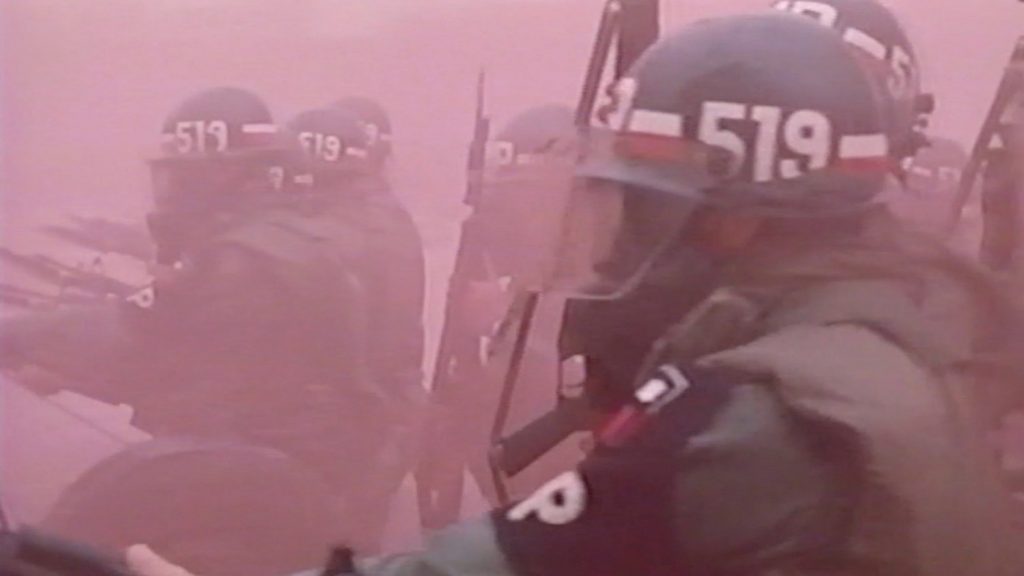
This riveting Documentary unearths the horrifying truths that followed the uprisings in the 1960s USA. In the aftermath, the US military received increased federal funding which was used to create model towns called “Riotsvilles,” where military and police were trained to respond to domestic civil disorder.
Director Sierra Pettengill uses only archival footage that was shot by the US military or appeared on broadcast television. What starts the documentary is the Johnson administration’s Kerner Commission, which resulted in an increase in federal funding for police. She lets the unsettling footage of the military and police in the Riotsvilles play out. Showing the excessive physical force and tear gas tactics used. In doing so, she effectively uses their footage to show the horrifying extent they went to.
Additionally, she goes further to expose the media coverage of the protests. Extended takes of media broadcasts are included, proving some of networks bias’. Even when a network, such as PBL, attempts to give a voice to the Black Community they are silenced by institutions. By including the government and media’s own footage, Pettengill exposes how institutional powers work to create a biased narrative and maintain the prejudicial control of a group in society.
Although the Film explores the late ’60s it draws parallels to today. These parallels show that time passes but institutional powers fight to keep things the same. With an eerie score played against the disquieting footage, Pettengill makes RIOTSVILLE, USA a powerful Documentary that may become one of the most terrifying films we’ve seen in a while.
RIOTSVILLE, USA screens virtually at Sundance:
Premiere: Jan. 21 at 2PM EST
Second Screening: Jan. 23 at 10AM EST (available for 24hrs)
For advertising opportunites please contact mrwill@mrwillwong.com