


tiff
#TIFF20: IN CONVERSATION WITH…. AVA DUVERNAY
By Mr. Will Wong
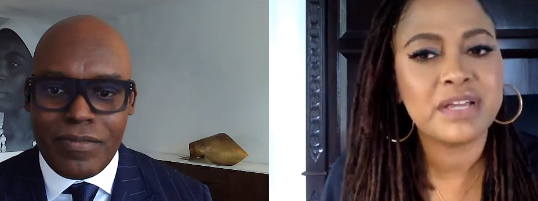
She’s been nominated for Oscars, juggling Writer, Producer and Director caps and TIFF was fortunate enough to have Ava DuVernay appear virtually for an In Conversation With… tonight with TIFF‘s Artistic Director and Co-Head, Cameron Bailey. DuVernay reflected on her career path which has included many firsts including being the first ever black female Director to be nominated for an Oscar with 2014’s Selma.
On the success of Netflix Documentary 13th which looks at the Thirteenth Amendment to the United States Constitution, which outlawed slavery:
“Though you’d think it would be Selma and A Wrinkle in Time, most people know me internationally for 13th as those two didn’t get a wide release.”.
On the impact of Netflix‘s When They See Us. Bailey let DuVernay know that No. 1-ranked Tennis Player Naomi Osaka has been wearing masks donning the names of black people whose deaths have been named in protests against racial injustice. She was inspired by the DuVernay-created, written and directed Mini-Series.
“Did she do that really? This is a story of Black Criminalization. The idea black people are inherently criminal. It doesn’t matter that Cameron Bailey is the Maestro to one of the biggest Film Festivals in the world. He’s a black man and he will be suspected for whatever’s gone wrong within a two mile radius. This is ingrained in our systems. When you can find a story that allows you to interrogate this – like this particular story – about five boys and how young they were and their story was catapulted to the top of the news in the U.S. What did they do? Are you sure? Should they stop resisting? Where were their parents? All those questions make the victim accountable for a crime against them. As much as Trisha Meili (the victim) was traumatized, these boys and all their families were traumatized. When you convict one person, we see the tentacles of that accusation on a family and a generation. Making a five-hour Movie was an adventure, but a forum I really embraced because it allowed us to tell this story from boys to men and how the system applied to every stage of their lives.”.
Bailey asks DuVernay how she feels about this age of using image and video as evidence.
“We’re able to use it to further our cause, but it’s always been used as that. You saw white folks who’d go to lynchings and see bodies hanging as entertainment. Martin Luther King – and I wish I had time to name the rest – all the people who made Selma and the Civil Rights Movement happen. They all did it before cameras so that it could be talked about by following generations.”.
“Images bear witness to tell the story to change the story. We have to make sure it’ts not used as propaganda and is used for truth-telling and protection. I look forward to using image in a fashion not to state that we matter, as much as I’m an advocate and participant in the Black Lives Matter movement. I’m resentful we even have to say the words. Images help that conversation be had. Hopefully, we can keep looking at these things and get to a time when it’s not needed.”.
On balancing real-life trauma with her own vision:
“Asking people to relive a tough time in their life is difficult. But to be able to get them to participate, say their truth, see the Script, be on-set and look at Editing Room material – to be involved in a progressive way – helps them to recreate the process so it’s not so traumatic when they see it on screen and so they feel it’s part of their story.”.
On casting Toronto’s Stephan James in Selma:
“A friend of mine had seen him as a side character in something else. We couldn’t find his agent or the kid. Aisha Coley (Casting Director) found the kid and the agent, and the agent didn’t call back. We are down to the wire to cast this and we needed to see him. We say it’s for Selma and it’s Canada and they don’t know what that is! We get him on tape, off to Atlanta and he’s spectacular and sublime. He’s beautiful and eager and gave a great performance. I just see him and go ‘My little Stephan!’.”.
On creating a creative space:
“I’m always welcoming you into my space, ‘Come on in, this is my space!’. I expect everyone to treat the space with respect and others with respect. This is space we’re sharing, it’s like our home while we’re shooting. These are Mama’s rules and stay within rules you’ll be just fine. I believe in just being welcoming to people and being kind from Actors to Crew to Executives.”.
On “safe spaces”:
“We’ve progressed from 5, 10 years ago. You put the onus of nervousness on them. You didn’t do anything. We need to change our perspective on these things and not see yourself as a victim, but a victor. I went into a meeting where I was the only one like me and asked, ‘How many women, how many black people, are there any indigenous people?’. These are questions I need to know if i want to participate. Put the onus on those people who keep things looking one way and not on us.”.
In addition to producing a Netflix Series with Football star Colin Kaepernick which will be shooting in the next 4-5 months, DuVernay has series of Warner Bros. projects to come. Her Series Queen Sugar is now shooting with Crew and Cast having moved back to new Orleans.
(Photo credit: TIFF)
#TIFF20: “SHADOW IN THE CLOUD”
By David Baldwin for Mr. Will Wong
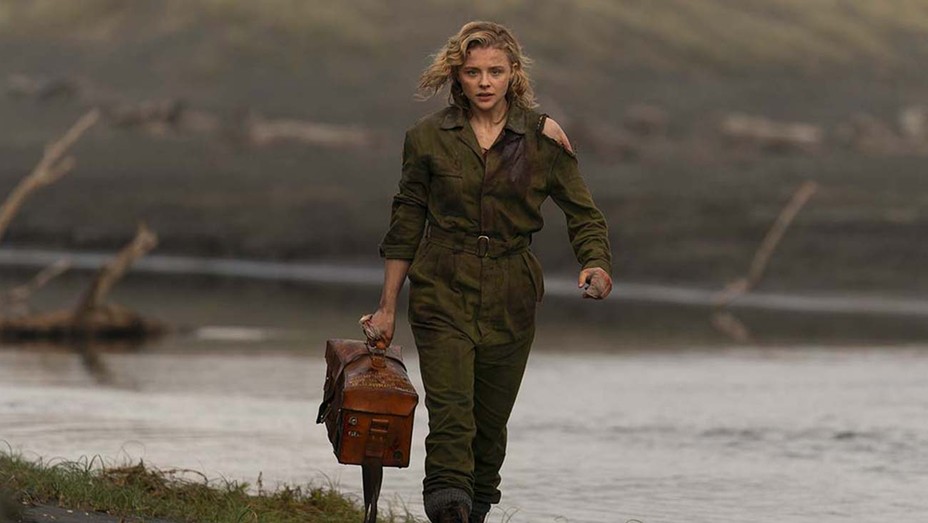
It is World War II and WAAF officer Maude Garrett (Chloë Grace Moretz) has jumped aboard a B-17 Flying Fortress as a last minute addition. The all-male crew are hesitant to let her stay, but she has orders to fly with them and keep her classified cargo safe. They force her to ride in a ball turret below deck, isolated on her own – and her mind may be playing tricks on her with the things she is seeing in the shadows.
I want to say more, but I fear that would spoil some of the outrageous and preposterous thrills that Co-Writer/Director Roseanne Liang has in store for Moretz and the rest of the crew. Liang plays with genre conventions throughout Shadow in the Cloud’s zippy 83-minute running time, never seeming keen to stay categorized in one box for too long. It morphs wickedly from a white-knuckle claustrophobic Thriller to a full-blown wartime action picture at the drop of a bullet, and then sprinkles in some Horror elements on top for good measure. The CGI is spotty in far too many cases and the genre mashup does not always work as intended (a MacGuffin reveal is a bizarre swing that left me bewildered), but the Film is wildly-entertaining in the many instances when it does.
As long as you prepare for multiple genre swaps, Shadow in the Cloud is quite a bit of fun. While I wish the Film was not being hit with a minor controversy over its writing credits, I feel the bigger disservice is that Covid has robbed us of the experience of seeing Shadow in the Cloud at its proper haunt, Ryerson with a Midnight Madness audience. I know in my bones that they would have eaten this Film up, and I chuckled when it became obvious what and where the reactions might have been. Hopefully, it gets to play to a big crowd like that another day.
Nick Robinson (Love, Simon and Jurassic World) has a blast as a gunner on the ship, but Moretz is the one who takes hold of the screen and never wavers. She is simply marvelous in the scenes in the ball turret, really selling the anguish, fear and determination her character is going through. She is vividly-expressive in these scenes (which take up a substantial portion of the Film’s first half), and she carries them into the absolute chaos of the Film’s second half. Her wonderful balancing act more than makes up for some of the plot contrivances and the minimal character development.
SHADOW IN THE CLOUD screens at TIFF ’20 as follows:
Sat, Sep 12
Visa Skyline Drive-In at CityView
11:59pm
Sun, Sep 13
Online at Bell Digital Cinema
6:00pm
#TIFF20: “ONE NIGHT IN MIAMI”

By Mr. Will Wong
Following-up on her Oscar-winning work in If Beale Street Could Talk, Regina King makes her Feature directorial debut at TIFF ‘ 20 with ONE NIGHT IN MIAMI, which though set in the past, still asks very timely questions facing the world today.
The Film is set one night in February 1964 uniting real-life friends and icons Cassius Clay (Eli Goree), Jim Brown (Aldis Hodge), Sam Cooke (Leslie Odom Jr.), and Malcolm X (Kingsley Ben-Adir) as they celebrate the former’s win in the boxing ring, crowning him Heavyweight Champion of the World. What ensues is hard-hitting dialogue which digs deep into some of the issues facing their community and where they stand in the big picture as important figures.
Based on Kemp Powers‘ Play of the same name, King is working with some tremendous talent with this Ensemble and with these great minds within the confines of a swanky hotel room, discussions get intense, heated and at once humorous. Clay is about to be renamed Muhammad Ali and is about the announce to the world that he has converting to Islam, but not without some hesitation. Brown after a successful career in Football, is about to accept a role in a Western film which would lead to a successful acting career with high-paying roles. Cooke navigates his world as a Pop Star, but is longing to sing about something more meaningful. Malcolm X as a prominent figure of the Civil Rights movement and Spokesman for the Nation of Islam, is about to get assassinated.
The Film poses some thought-provoking discussion within the Black community about how the world is perceived differently between those who are light-skinned versus dark-skinned; what it means for a Black Entertainer to be paid well when it comes at the cost of their dignity and their community; or what it means to be revered publicly, but not to be welcome into someone’s home because of the colour of one’s skin.
One poignant scene in particular has Ben-Adir‘s Malcolm X in a chilling plea to his brothers that still resonates to this day amidst the rise of the Black Lives Matter movement. He states that there is no more room for standing on the fence anymore with black people dying on the streets every day. “Either you stand on this side with us or that side against us”, he says. Another moment in the Film talks to White Privilege and how a black person is expected to feel indebted to a white person who wasn’t horrible to them. This falls in-line with the current thought that it isn’t enough to be “nice” and that what is required is that we be actively be Anti-Racist.
King succeeds largely in this superb first Feature, giving us a tightly-written and directed Film which while set almost 60 years ago today, has some uncannily-relevant messaging that needs to be revisited today.
ONE NIGHT IN MIAMI screens TIFF ’20 as follows:
Visa Skyline Drive-In at CityView
7:45pm
Sun, Sep 13
Online at Bell Digital Cinema
Streaming in Canada. Available from:
6:00pm
Wed, Sep 16
TIFF Bell Lightbox
4K
#TIFF20: IN CONVERSATION WITH…. SAOIRSE RONAN
By Amanda Gilmore for Mr. Will Wong
At just age 26, Saoirse Ronan has managed to become one of the top Actors of her generation. She got nominated for her first Academy Award at the age of 13 for her work in Atonement. Since then, she’s been nominated three more times.
Her talent is undeniable as seen through the unforgettable mix of characters she’s brought to life on-screen over multiple genres, such as survivor Hanna, homesick Eilis, uninhibited Lady Bird, and Writer Jo Marsh.
Her latest role has her starring as a grieving Charlotte in Francis Lee’s Ammonite. It follows Palaeontologist Mary Anning, played by Kate Winslet, who cares for Charlotte while her husband leaves for work. The two build an undeniable bond and fall in love.
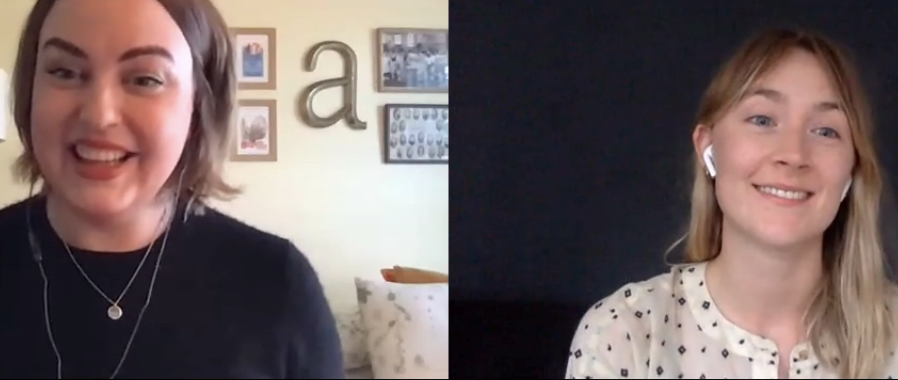
Today, she joined Canadian Novelist Anne T. Donahue for TIFF’s In Conversation With… Saoirse Ronan.
On where home is to Ronan:
“It’s less of a physical location for me. I think that’s always been the case. I have tried to find it in a place or country, but now I’m older and I realize there are a few core people. That is my home.”.
On becoming an Actor:
“When we moved out to Ireland my dad was working on a film and they needed someone and I was added into it. I didn’t really want to do it. I was a quiet kid. It was this weird Art House film where I was half-human and half-clown. *laughs* And I said, ‘No, that sounds terrible. I don’t want to do that.’ But he wanted me to. So I did it. I was 6, 7, or 8. From the moment I got on set I really loved it. I really liked the discipline matched with the play aspect.”.
On when she knew she wanted to be an Actor:
“It wasn’t until I was 12. It was when I was doing Atonement. I loved that. And I knew that that’s what I wanted to do.”.
On Brooklyn:
“I was a wreck. An absolute wreck. I was 20, so hormones were all over the place. I moved to London at that time. I did Brooklyn in the middle of that transition. And I went back to where I grew-up. I hadn’t been there in years. It represented a past time in my life that I will always be connected too, but was moving past. I think what made it overwhelming was that it was a severe meeting of two worlds. My home life, where I went to school and wasn’t an Actor. And this new stage in my career which was me starting to lead as a woman, and it was an Irish woman. I was just thinking, ‘I have to get this right.’ I was completely terrified. I never felt aware of the camera in a negative way or ever felt that it had paralyzed me. But I was feeling like that a lot in Brooklyn. But it ended up being such a special film for me to do. That Film gets to me in a way that nothing else I have done has. It was an honour to tell that story.”.
On Lady Bird:
“It’s not about her [Greta Gerwig] life. But she did grow up in Sacramento and she was in a theatre group. And I think we both wanted to be more like Lady Bird. But we were both more like rule followers. I didn’t mind being influenced by the way [Greta] was. But I couldn’t just carbon copy .
On her Activism:
“I don’t consider myself an Activist. I think it would be unfair for me to say that. We (Actors) are a mouthpiece for the people who actually know what they’re talking about. That’s how I’ve always felt about. I’ve met a lot of people who support incredible causes and are passionate and hardworking about it. And I’m kind of like everyone else asking, ‘What can I do? What do you need me to do to spread that message further?’ I think there are a lot of people who do far more than I do.”.
On Timothée Chalamet:
“[In Lady Bird] we only had a few scenes together. I always knew he was special and magnetic. We are very different people and in our approaches to work. I remember we were on the way to set and were talking about our families and normal stuff. We always felt very comfortable with each other. He’s American and European as well. We sort of were able to tap into that. On Little Women, that’s where it felt more like a collaboration. We had these lengthy scenes where we would ebb and flow performance-wise. He’s someone I want to continue to work with.”.
On Ammonite:
“I think it’s a luck of the draw whether you get to work with someone who you click with. Kate and I had met and just got on straight away. I think a big part of that is her because she is friendly and open. One of the good things about the junkets and awards season is getting to meet a lot of wonderful people in the mix of the madness. So, I met her a couple of times doing that stuff. And then this came around and she was a real supporter for me doing it. We were just really lucky we got on straight away. Two women getting to come together, and with more of the intimate scenes and being able to choreograph the love scenes ourselves was great. Especially with Kate.”.
On taking on so many roles:
“I don’t work as much as other people. I’m at a place at the minute where I don’t need to run into a job just to work. I think because I’ve been doing it for 16 years or more now. It’s very important that I don’t burn out or kind of lose the love for it. It’s important for me to protect the bond with my work that I have.”.
Our Review for AMMONITE can be found here.
(Photo credit: TIFF)
#TIFF20: “I CARE A LOT”
By Amanda Gilmore for Mr. Will Wong
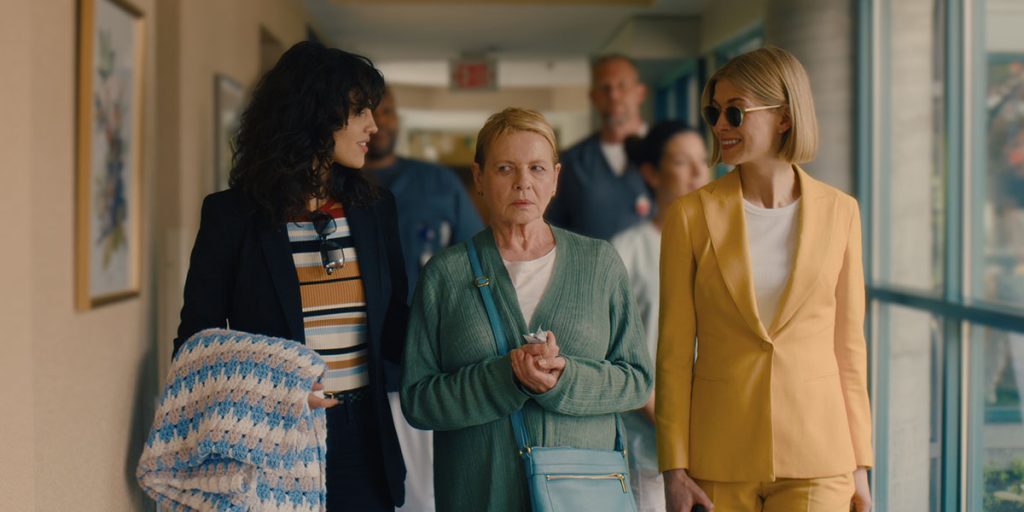
J Blakeson’s dark Thriller follows a legal Conservator with insidious intentions. Marla (Rosamund Pike), along with her life and work partner Fran (Eiza González), have created a despicable business of defrauding their elderly clients. Their newest target is the rich and unassuming Jennifer (Dianne Wiest). After lying to a judge in an emergency hearing, claiming Jennifer has Dementia, Marla gains guardianship of her. However, Jennifer isn’t who she appears to be. Marla and Fran quickly realize they are messing with the wrong woman.
This could have been a Drama about seniors being taken advantage of by the state and appointed guardians. But thankfully, it’s a lot more than that. Blakeson adds a mafia storyline which turns this Drama into a Thriller.
At the forefront is Pike who delivers her best work since Gone Girl. She excels as the icy Marla. Being an Antagonist, she finds herself battling against an Antagonist of her own, that being Crime Lord (Peter Dinklage) who has close ties with Jennifer. Dinklage is outstanding as a Gangster who will stop at nothing to get his mother back and away from Marla‘s control. The Film’s shining moment is when Pike and Dinklage come face-to-face and we witness their shifts in power.
I Care A Lot is a cautionary tale about the corrupt web of elderly abuse. We don’t get to see these feminist characters as this in leading roles nearly enough, but we sure wish we did.
I Care A Lot screens at TIFF ’20 as follows:
Sat, Sep 12 9:30pm
RBC Lakeside Drive-In at Ontario Place
Sun, Sep 13 6:00pm
Online at Bell Digital Cinema
#TIFF20: “AMMONITE”
By Amanda Gilmore for Mr. Will Wong
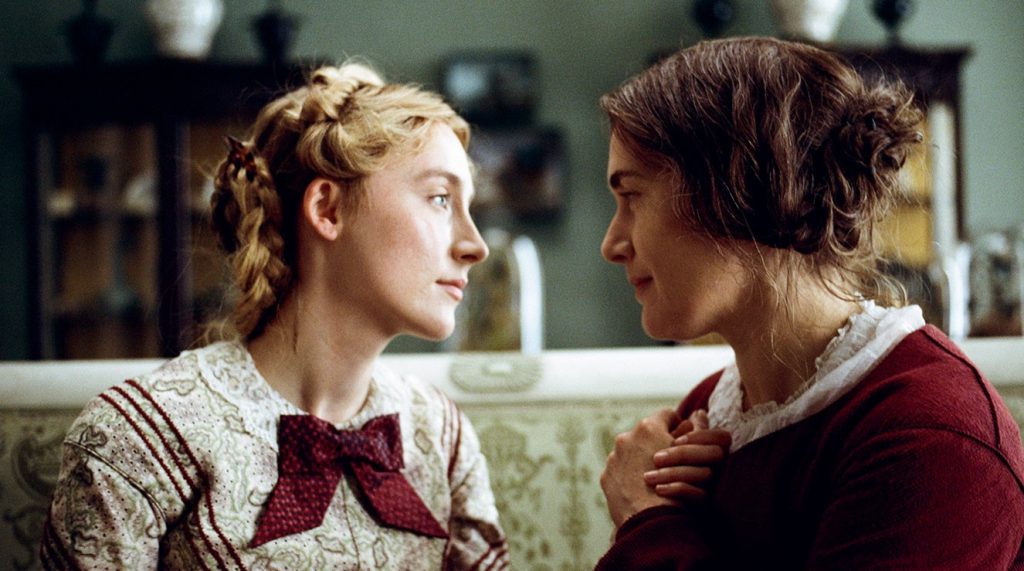
Francis Lee’s latest takes us to 19th-century Dorset. It follows real-life Palaeontologist Mary Anning (Kate Winslet) as she searches the coastline for marine fossils. She spends her days alone, walking the shore and helping at her mother’s tiny shop. Soon she finds her solitary life becomes upended when she’s asked by another Palaeontologist to care for his melancholic wife, Charlotte (Saoirse Ronan). In need of the money, she agrees. Gradually, Mary and Charlotte grow close.
Lee does an amazing job shooting the Film in a show-don’t-tell way. There is limited dialogue throughout. Instead, he creates scenes where the weather, objects and characters actions speak volumes. This becomes integral in escalating visually the blossoming love between Mary and Charlotte. In the First Act, Mary is rightfully angry and curt, while Charlotte is mourning the loss of her child. The beautiful coast’s weather parallels their emotions. There are overcast skies and violent waves attacking the coastline. As they spend time together, the clouds clear and the waters calm.
Ammonite is more than a period-Romance. Lee focuses on the work of the incredible Mary and the theme of women taking ownership of their work. During the 19th-century, no Scientific Society would take-in a woman. No matter how hard and astounding Mary’s work was, she was excluded. However, there were male Scientists who were interested in learning from her, being the best in her field. But in the end, they knew she was in need of money. So, they would pay her for what she found and put their names on it. In focusing on this, Lee enhances his Script with a love story involving ownership and class.
Mary loved and lived for her work. It didn’t matter that in doing so, she wouldn’t be part of the upper-class. However, Charlotte is part of the upper-class. It’s here that conflict arises in their relationship. So many times, we have witnessed a forbidden same-sex romance. Although that is at play here, Ammonite focuses on their differing upbringings and that divides them no matter how badly they want to be together. Once again, Lee shows us this instead of telling us. He places his characters on opposite sides of Mary’s glassed sea-creature on display inside the British Museum.
With the talent of Winslet and Ronan in the Film’s lead roles, we are expecting greatness, and they do not disappoint. Winslet is always dynamite. Here, she gives one of her strongest performances. She encapsulates the anger Mary has for having to sell her work and her vulnerability when falling in love with Charlotte. Ronan gives a performance like we’ve never seen from her before. She’s strongest in portraying Charlotte’s grief and her desperation to keep Mary close to her. Their raw emotion feels authentic and honest, especially in their love scenes that are shot meticulously and delicately. And with minimal screen time, Fiona Shaw captivates as a previous love of Mary’s.
While at times it lags a little, this period-Romance which fuses Gender Politics and Classism, is made-up for with stellar performances, particularly by Winslet.
Ammonite screens at TIFF ’20 as follows:
TIFF Bell Lightbox
Sat, Sep 12 6:00pm
Online at Bell Digital Cinema
Mon, Sep 14 12:30pm
TIFF Bell Lightbox
#TIFF20: THE DRIVE-IN EXPERIENCE
By Mr. Will Wong
As you know, we’ve been attending TIFF for several years now and we in all honesty were kinda excited for the first time to experience it in Drive-In format. This screening option is reserved more for the higher-profile titles at the Festival, with films divided between RBC Lakeside Drive-In and OLG Play Stage (Ontario Place Boulevard x Remembrance Drive) , plus VISA Skyline Drive-In (20 Polson Street).
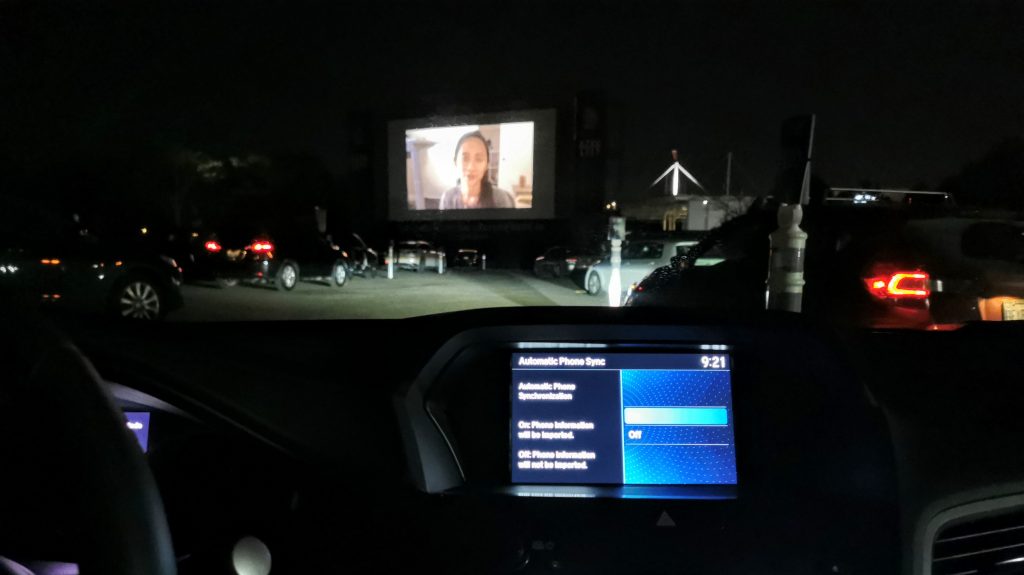
We had the joy of seeing a Film at RBC Lakeside Drive-In and it was a pleasurable, well-executed experience which we can see being used again in future editions of the Festival. We loved the private experience of seeing a Movie with plenty of personal space from others. We could even make comments and not worry about distracting others. And the acoustics were perfect. Above this, we loved the retro charm of all this.
A few key things on the experience to guide you through it if you plan to see your films this way at TIFF ’20:
1. Doors open two hours before your Movie starts, but we arrived an hour early and had plenty of time to settle-in comfortably without having to queue to get in.2. Upon arriving at the gate of the venue, you should have your digital tickets ready for scanning on your phone and you will be guided along by volunteers on a path to the theatre.
3. On your ticket, you are provided a reserved parking spot (sorted by colour coding) for your car and volunteers will guide you to that spot. Ensure you turn your headlights off. This is a courtesy to others.
4. A volunteer will brief you on the experience, including where washrooms are and what station to tune-into on your car radio to enjoy the Movie.
5. Concessions are available at the venues. You will be provided instructions or a link how to order on your phone and they will be brought to you, usually in a contactless manner. It also is totally fine to bring your own food. We did!
6. RBC Lakeside Drive-In has a stage with a live musical guest during the pre-show. It is good etiquette to honk your car to show appreciation for the performance.
7. With your car being on Accessory mode to keep your radio on to watch the Movie, it will turn off on its own at some point. If that happens just turn your car back on, carefully keep your headlights off so not to distract others.
8. There are Mazda Guest Automative Services available in case your car battery dies.
9. If you must leave your car during the Movie, ensure you keep at least 6 ft away from others and ensure you have a face covering on.
10. Do your research and check the length of your Film. It is a good idea to get a head start on the exit rush of cars out the venue once the Film ends, unless you do enjoy sitting through the credits. Which is totally fine too, but be prepared to wait!
Some snaps of our experience, which we were able to enjoy at TIFF ’20 courtesy of the 2020 Acura ILX!
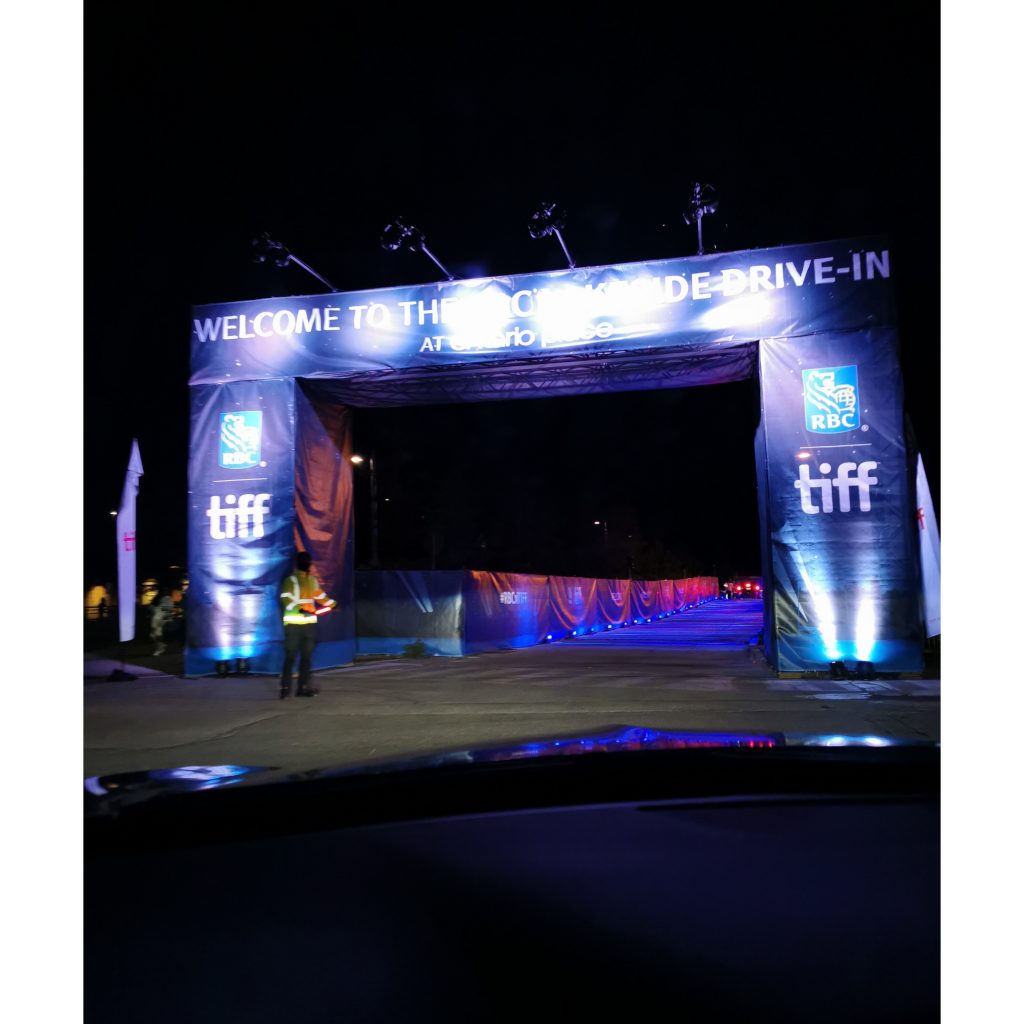
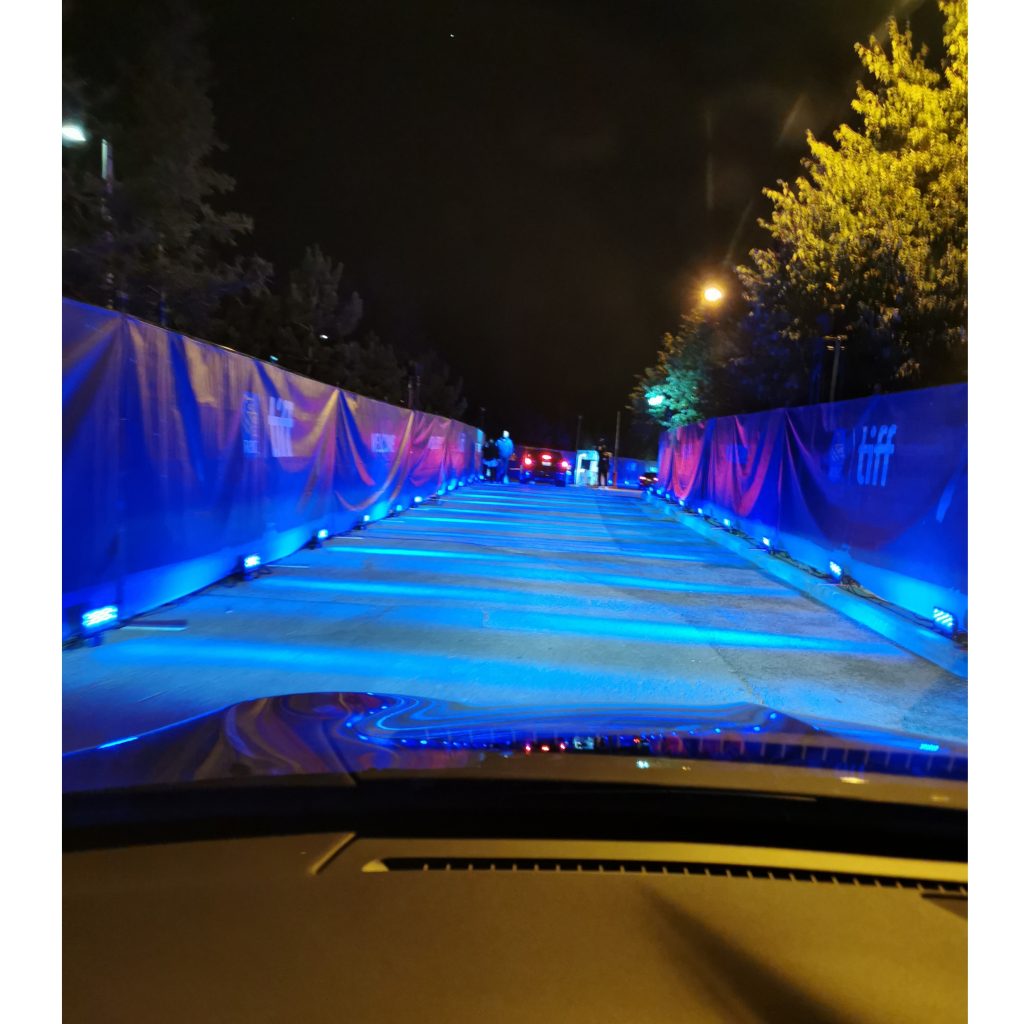
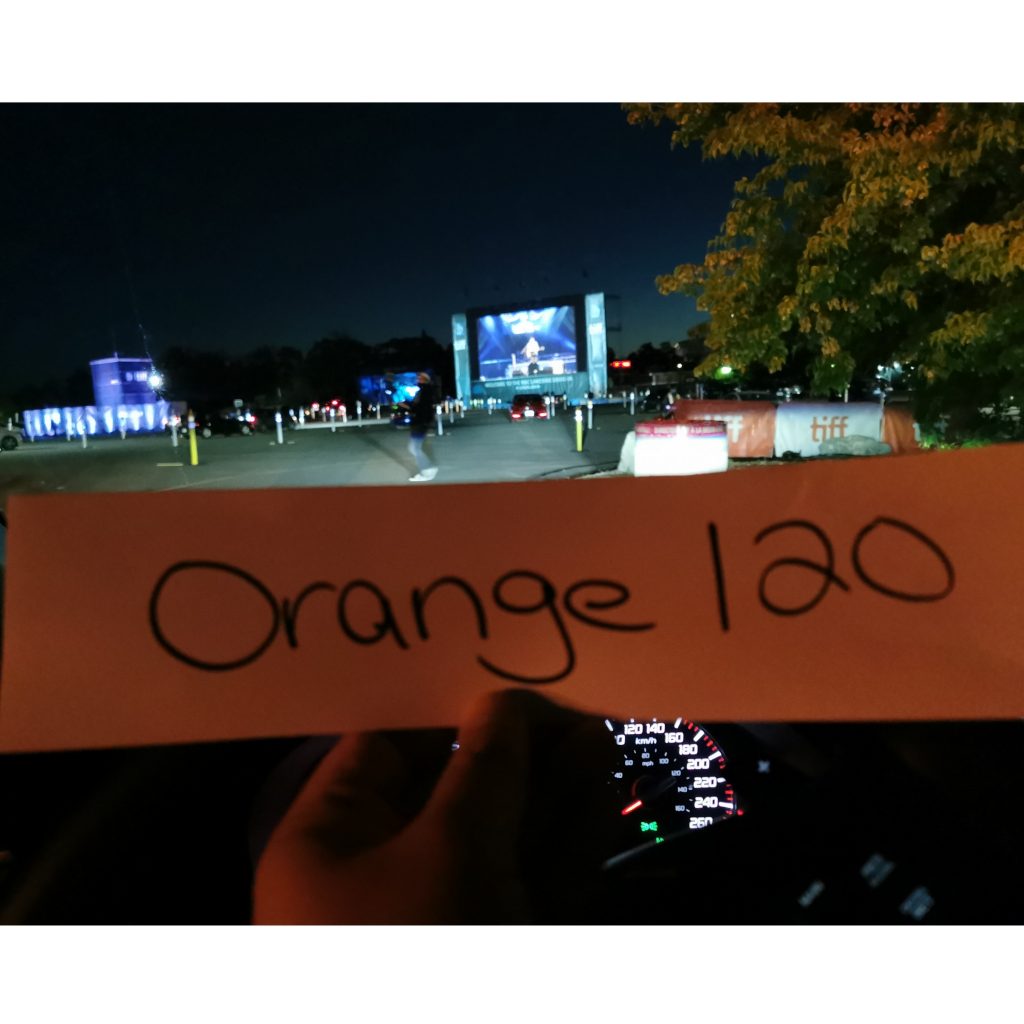
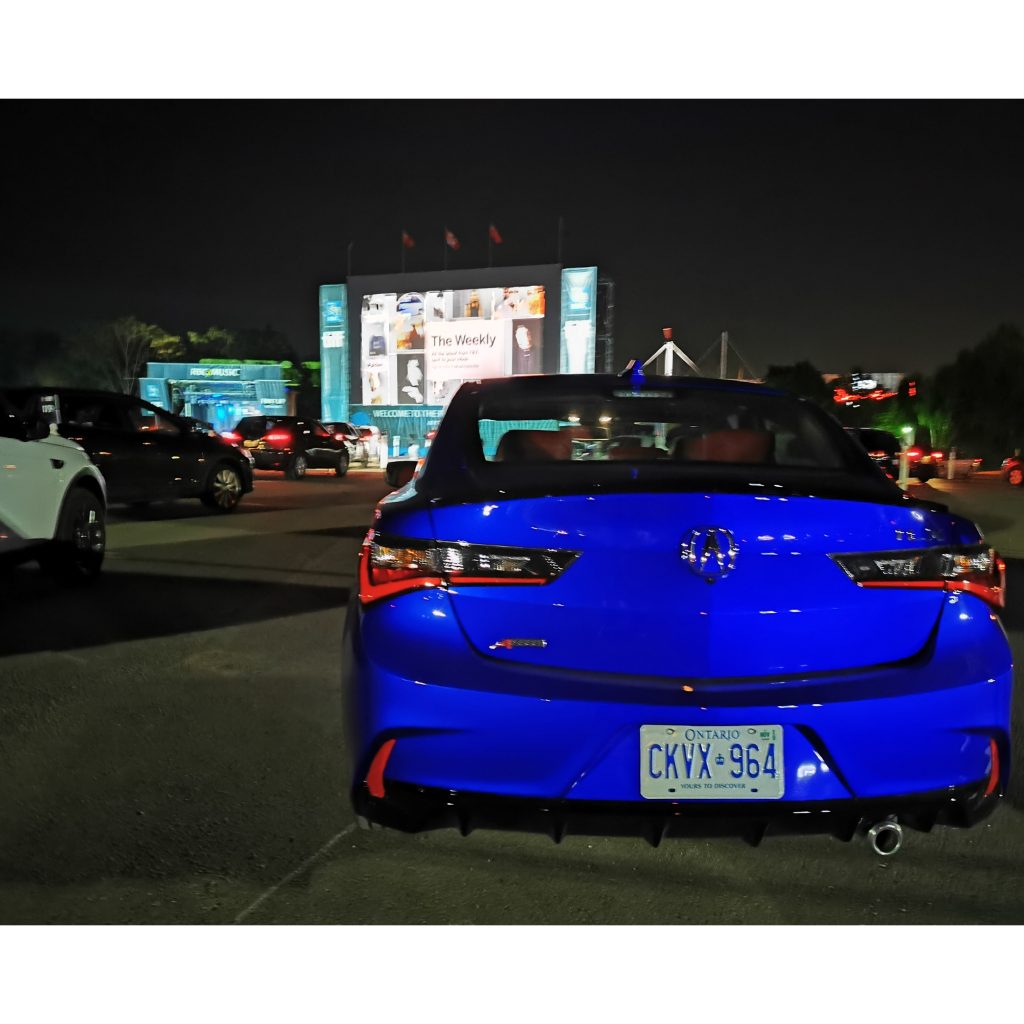
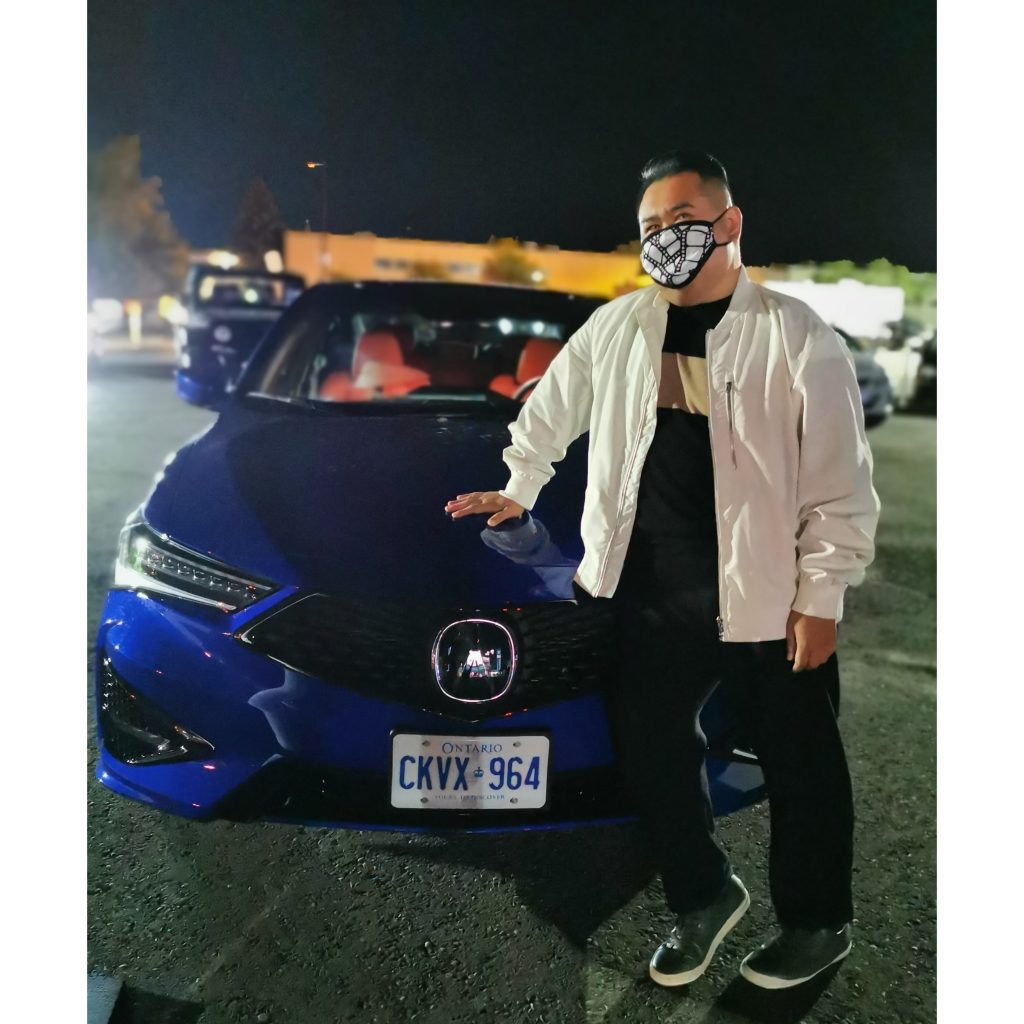
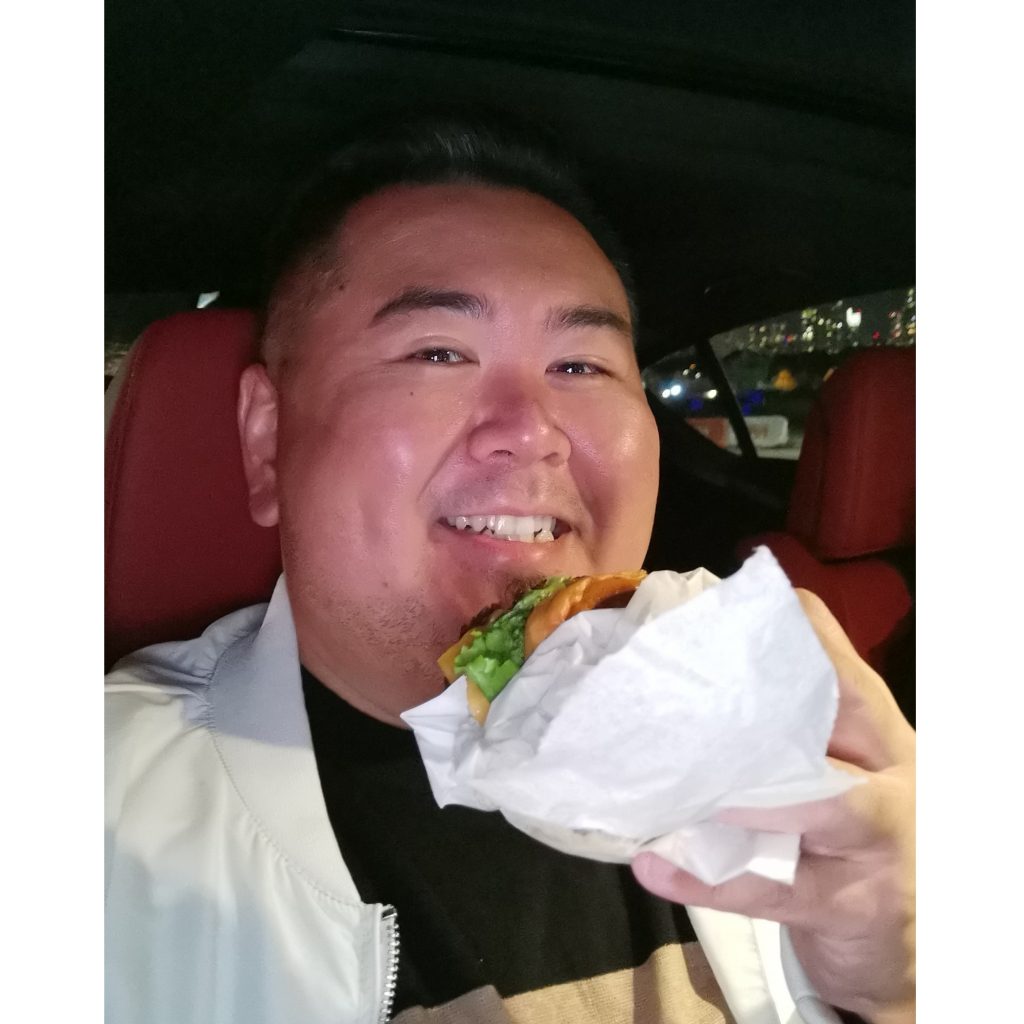
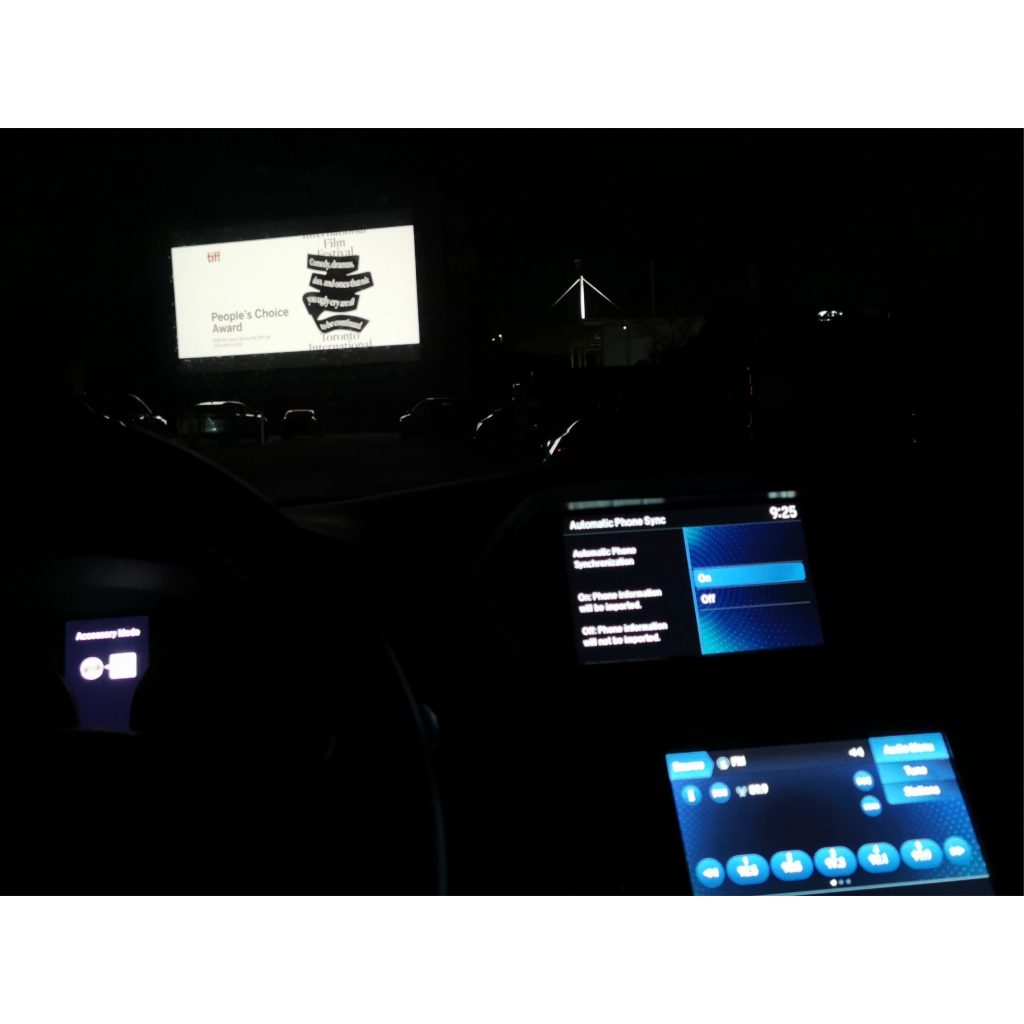
A special thanks to H&M Canada for the fashion as well! Many of you are asking about the face covering and this is an official TIFF ’20 mask available only at the TIFF Bell Lightbox Gift Shop!
(Photo credit: Mr. Will Wong)
#TIFF20: “NOMADLAND”

By Mr. Will Wong
All eyes are on Chloé Zhao who debuted at TIFF ’17 with The Rider, topping several best-of lists that year. While her work on Marvel’s The Eternals is on its way to us, sophomore effort NOMADLAND comes with high hopes and she does not disappoint.
The Film centers on Fern (Frances McDormand), a widow whom after the economic crash in 2008, loses her home and lives a content life free to roam as a nomad. Not yet able to retire, she lives out of her sometimes reliable van, taking-on odd jobs as a means of survival. Once a supply teacher, she now takes on temporary work at the Amazon warehouse for a bit. She works as a host at an RV park for a while, among other one-off gigs. She is our eyes and ears into this little-known about world travelling place to place with no destination, meeting several fascinating people along the way, who also live the nomadic life and through Fern, we learn their stories as well. These characters, played by non-actors give the Film an earthiness and soul that feels so authentic and Fern blends right into the world.
The story we want to know most about though is why she chooses this way of life with no benefits to take care of her should she fall ill and not knowing if she has enough money to cover repairs on her van. While at times appearing uncomfortable, she never once complains about the life. And at once when offered a choice to settle down and live comfortably a few times throughout the Film, she never takes them. If anything, she appears even more like a fish-out-of-water dwelling in the world of others. She is enigmatic and McDormand effortlessly draws us into Fern‘s way of life, which is comprised of constant moving parts.
Zhao not only directs, but adapts Jessica Bruder’s Nomadland: Surviving America in the Twenty-First Century and the Film feels very much like a Documentary and we are just a fly on the wall. The Rider Cinematographer Joshua James Richards teams-up with Zhao once again, capturing breathtaking landscapes and Fern as part of them, so exquisitely. Visually, Nomadland has an understated sense of style yet a comforting familiarity to it. Ludovico Einaudi‘s piano-driven Score is soothing and complements the imagery perfectly.
The Film is about surviving and living one’s own truth and while very much a quiet piece, it is a thought-provoking one.
NOMADLAND screens at TIFF ’20 as follows:
RBC Lakeside Drive-In at Ontario Place
9:15pm
Sat, Sep 12
Online at Bell Digital Cinema
Premium
#TIFF20: “SPRING BLOSSOM”
By George Kozera for Mr. Will Wong
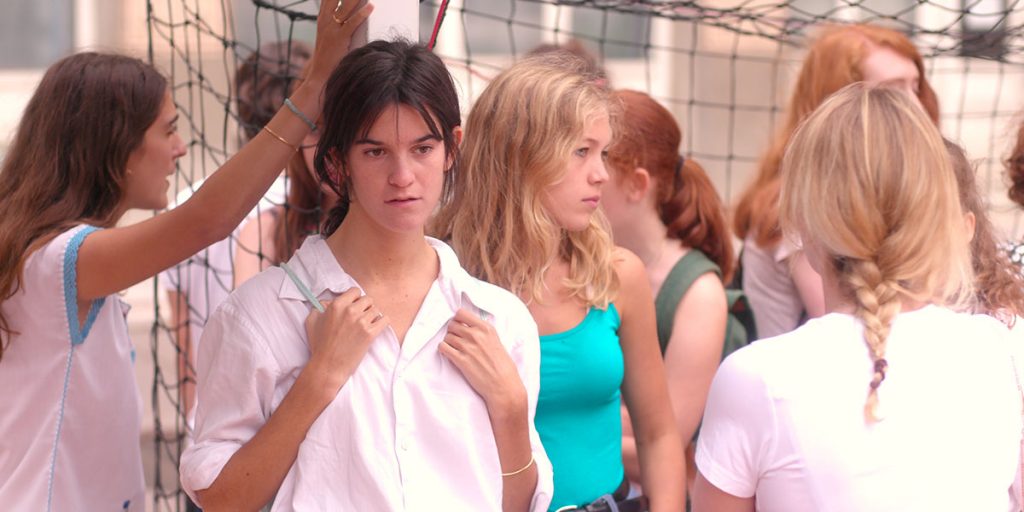
Despite her luminous smile, it becomes quickly apparent that 16-year-old Suzanne (Suzanne Lindon) is bored. She is clearly not interested in the nonsensical prattle of her friends and classmates and escapes being in their company as often as possible. Even when she decides to go to a classmate’s house party, much to the surprise of her parents and older sister, she doesn’t quite fit in – she doesn’t like beer and when asked to rate all the boys there from 1 to 10, she tellingly replies with “they’re all 5s”. Then one day, passing a theatre on the way home from school, she notices a handsome, curly-haired and bearded man. Raphael is 35 years old and an actor and she senses that they are kindred spirits. They ultimately meet and realize that, despite their age difference, they are compatible in so many ways and a relationship slowly blossoms.
SPRING BLOSSOM, from France, is an atmospheric, languidly paced tale of love, made remarkable due to the immeasurable talents of Lindon. Not only is she the star of this Movie, she wrote the Script when she was 15-years-old and directed this Feature as well. Reminding me of a young Genevieve Bujold, she has the screen presence and charisma that rivals the auspicious debuts of Julia Roberts and Leonardo DiCaprio. Bathed in whites, her directorial choices mostly hit the spot despite a few self-indulgently choreographed moments. As a Writer, her ear for dialogue is authentic and fluid and the Plot is believable, never prurient. Arnaud Valois registers beautifully in the role of Raphael and never fails to captivate.
With Paris as a backdrop, I was swept away in a haze of Gauloise while being transfixed throughout SPRING BLOSSOM.
SPRING BLOSSOM screens at TIFF ’20 as follows:
TIFF Bell Lightbox
Subtitled
7:30pm
Fri, Sep 11
Online at Bell Digital Cinema
Subtitled
Streaming in Canada. Available from:
6:00pm
Thu, Sep 17
TIFF Bell Lightbox
Subtitled
#TIFF20: IN CONVERSATION WITH…. HALLE BERRY
By Mr. Will Wong
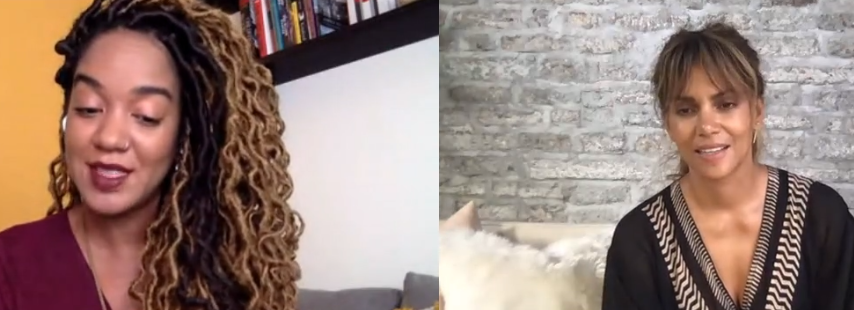
As per of TIFF‘s SHARE HER JOURNEY initiative promoting emerging females in Film, the public got to enjoy a free virtual event, In Conversation with…. Halle Berry tonight, hosted by CBC‘s Amanda Parris.
Having been in the industry for over 30 years, Berry‘s career has been nothing short of legendary. In addition to winning an Oscar for her work in 2001’s Monster’s Ball, her extraordinary catalog has seen her star in the X-Men Franchise, John Wick: Chapter 3 – Parabellum, Jungle Fever, Boomerang and several more impactful films of our time. She has seen an incredible longevity and tonight she reflected on her path to success.
Berry makes her directorial debut at TIFF ’20 with BRUISED, which premieres at the Festival. The MMA Sports-Drama sees her starring as disgraced fighter Jackie “Justice” who must face an up-and-coming rival in the ring and also confront the son she abandoned several years prior. The Film just sold in a huge deal for $20 million to Netflix.
Berry on getting into acting:
“I was looking for an outlet to explore what I had to say that modelling couldn’t. Originally, I thought I’d be a reporter and travel around the world reporting the news. In acting, I let the universe set forth what I should be doing. It happened with my directorial debut and when I started acting.”.
On being more than her shell and playing a drug addict in Spike Lee‘s Jungle Fever, her breakthrough role:
“I grew-up in an environment where I knew I didn’t always fit in. I knew I was full of substance and had tons of stories to tell. I knew I was always more than my shell. I felt from Jungle Fever on, I could be seen as more than a pretty face model-turned-actor.”.
On her Oscar-winning role in Monster’s Ball:
“I always go for the dark horse character in the race and I’m always drawn to that. This speaks to my own brokenness. I get to have a cathartic experience and share parts of myself I don’t always present so forwardly. I know where exactly the pain of this character lives innately.”.
On whether she watches her performances again:
“I watch them only once to prepare for Press and once at the Premiere. I never go back and watch them. That is the hardest thing to do. In my directorial debut, I had to watch myself over and over and over and that was one of the hardest aspects.”
On how she feels about the thought that Monster’s Ball propagates the idea of a ‘White Saviour‘:
“I stand behind everything I ever said. It was an important story to tell and a character I related to. I never looked at Billy Bob as the ‘White Saviour‘, but instead, two characters who needed love. I’ve never thought of the Film as being about ‘black and white’.”.
On winning an Oscar:
“I’ve never embraced any character thinking this is going to get me an award. Once you get an award, there is nothing to ensure you’ll get another award. The unfair expectation is once you do win an award, you will continue to win like you had control over that the first time. I’ve tried to stay hungry as an Actor and take risks… I can’t say it got any easier after I won that award.”.
On the changing landscape for coloured women in Entertainment:
“I do see things have changed. 20 years ago, we were in a different situation than we are today. Look at our landscape. I think our best movies are on TV. and it’s full of colour. I’m really proud to be part of the evolution. It’s starting to feel better.”.
On her directorial debut, BRUISED, which she had to re-imagine instead with a middle-aged black woman. The role originally was written for an Irish-American white woman.
“I wanna see someone rise above obstacle. That’s what most people relate to. We’re all struggling to survive and show-up for ourselves and our families.”.
“I was charged with finding someone to bring this story to life. After speaking to the Producers, I realized through the prodding of a close friend of mine I could direct this after thinking ‘Nobody understands what’s in my head!'”. “I pitched myself as the Director and I was off to the races.”.
Our Review of BRUISED will be posted later next week, be sure to check back.
(Photo credit: TIFF)
For advertising opportunites please contact mrwill@mrwillwong.com