


When your most anticipated tiff '26 film is everything you wanted and so much more..Still sobbing.

9,901

Mr. Will Wong
Official Fan Page for Toronto Entertainment & Food Personality Mr. Will Wong, multi-award winning Blogger and Photographer.
X: @mrwillw
Instagram +TikTok: mrwillwong

Will Forte and Lana Condor on the journey getting COYOTE VS. ACME to the big screen after 36 years in development. In theatres 8.28.26.![]()
![]() www.mrwillwong.com/interview-will-forte-and-lana-condor-on-coyote-vs-acme
www.mrwillwong.com/interview-will-forte-and-lana-condor-on-coyote-vs-acme
New Trailer for the eagerly-awaited CLUB KID.![]()
![]() www.mrwillwong.com/firstlook-club-kid-trailer/
www.mrwillwong.com/firstlook-club-kid-trailer/
*FLASH GIVEAWAY* ![]()
![]() Enter for a chance to win passes to an Advance Screening of TONY in Vancouver and Montreal TOMORROW NIGHT! We will be drawing today. Hurry!
Enter for a chance to win passes to an Advance Screening of TONY in Vancouver and Montreal TOMORROW NIGHT! We will be drawing today. Hurry!![]()
![]() www.mrwillwong.com/tony
www.mrwillwong.com/tony![]()
![]() "Like" this post, comment your city and tag a friend you're taking. Multiple entries allowed.
"Like" this post, comment your city and tag a friend you're taking. Multiple entries allowed.![]()
![]() TONY is in theatres everywhere 8.22.26.
TONY is in theatres everywhere 8.22.26.
Full 2026 @tiff_net schedule and fnal round of programming announcements. Happy planning!![]()
![]() www.mrwillwong.com/tiff-full-schedule-announced-for-2026-toronto-international-film-festival/
www.mrwillwong.com/tiff-full-schedule-announced-for-2026-toronto-international-film-festival/
TORONTO: Enter for a chance to win passes to an Advance Screening of LUNAR WAY August 27, 28 or 30, 2026, at Paradise Theatre.![]()
![]() Details: www.mrwillwong.com/lunarsway
Details: www.mrwillwong.com/lunarsway![]()
![]() "Like" this post and tag a friend who's coming with you. Multiple entries permitted. Please specify which night you are signing-up for.
"Like" this post and tag a friend who's coming with you. Multiple entries permitted. Please specify which night you are signing-up for.
#REVIEW: “THE UPRISING”
Review by Nicholas Porteous for Mr. Will Wong
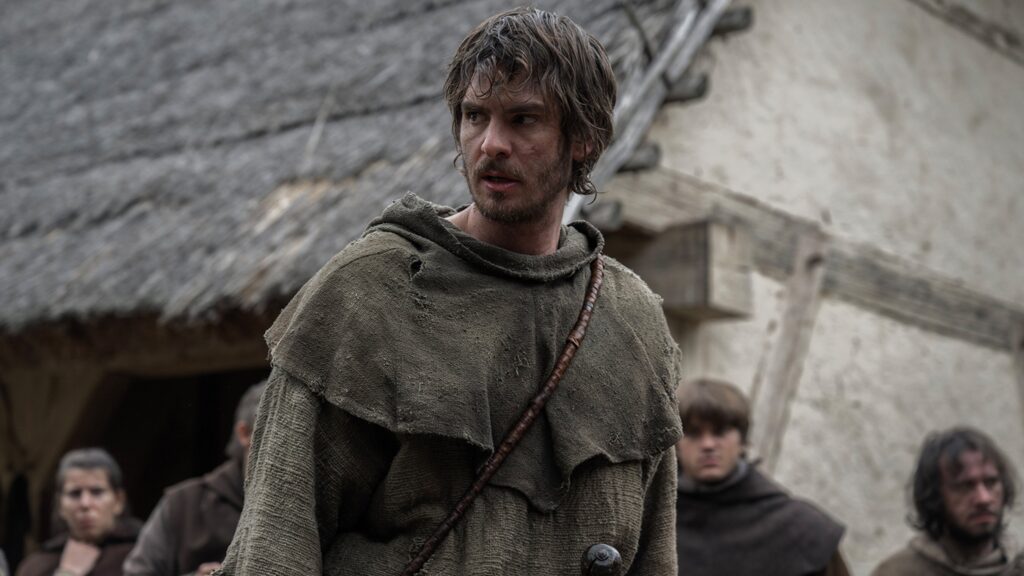
It’s 1381, the plague’s taken half the English population, and Andrew Garfield plows mud every day before he visits the graves of his wife and children. Meanwhile, King Richard II can’t be bothered to leave his room (he’s having bad dreams like everyone else) and the kingdom is almost bankrupt, so it’s time to impose more taxes on the peasants! When Garfield is commanded to pay the ‘death tax’ for losing his family years ago, he rightfully snaps, sparking a rebellion in his village which snowballs into a larger, fearsome uprising headed straight for the King. Paul Greengrass (the Bourne sequels, Captain Phillips) directs The Uprising with his signature steady-zoom aesthetic–an unexpected choice for a medieval drama/thriller. It’s an intriguing aesthetic particularly against the well-realized and dank world of 14th-century England.
Garfield‘s character is known only as “Ploughman” because “I am what I do.” But The Uprising feels like a backdoor Robin Hood prequel, inspired by the same historical events. There might be some narrative strategy behind keeping Garfield‘s identity anonymous. He’s meant to represent the spirit of righteous rebellion, and it’s fun to see him take the vague form of that legendary character without being explicitly named. Unfortunately, the lack of a name also echoes the dryness of The Uprising‘s screenplay.
The uprising itself takes no time to get cooking. Garfield‘s transformation into the leader of his village’s revolt mostly occurs offscreen. Keeping this turn a secret leads to one surprising moment early on, but it comes at the cost of understanding the actual motivating and organizational forces driving the collective. I yearned for more on that front. How did the villagers come together? Who elected Garfield? Was there any pushback from those with trepidation about risking their lives in the name of reform? Much of the movement feels as anonymous as Garfield’s lack of name. The same goes for those greedy nobles. Despite a stacked supporting cast including Tom Hollander, Jamie Bell, Thomasin McKenzie and Katherine Waterston, these characters never feel like much more than faces and forms doing their best to elevate the material. Richard II (Woody Norman) pivots from one idea of the king to another, but there’s no connective tissue–just an inconsistent script that shows a flustered boy in one scene and a vicious antagonist in the next.
The Uprising is very 2026. It takes place in a post-plague world, economically decimated by a power-hungry ruler who imposes completely random taxes on the poor. It should feel like a rousing cry for justice, and the power of revolt. But the movie drifts out of relevance, with an ending that feels incredibly toothless and out of touch. The defiant tone of the filmmaking and the events themselves seem completely at odds. Despite its immersive environments and an armada of incredible talent on screen, The Uprising is critically hobbled by uninspired characterizations and a compromising spirit. Robin Hood? Kind of. Merry men? Not even a little bit.
Universal Pictures Canada and Focus Features release THE UPRISING September 11, 2026.
Leave a Reply
For advertising opportunites please contact mrwill@mrwillwong.com