


Super-impressive wire-to-wire score in blistering fractions, from the talented LAMIRADA in the Glorious Song for @jcarrollracing and owner Mark Dodson, with @FraserAebly aboard. #BetOntario
4
9,926

Mr. Will Wong
Official Fan Page for Toronto Entertainment & Food Personality Mr. Will Wong, multi-award winning Blogger and Photographer.
X: @mrwillw
Instagram +TikTok: mrwillwong

Enter for a chance to win a digital download of SPIDER-MAN: BRAND NEW DAY! AVAILABLE ON DIGITAL OCTOBER 6, 2026 AND ON 4K UHD, BLU-RAY & DVD DECEMBER 15, 2026.![]()
![]() We are giving away digital copies of the #1 domestic movie of all time!
We are giving away digital copies of the #1 domestic movie of all time!![]()
![]() "Like" this post for an entry, tagging 1 friend who loves SPIDER-MAN as much as you!
"Like" this post for an entry, tagging 1 friend who loves SPIDER-MAN as much as you!![]() Multiple entries allowed. Codes are for use in Canada only. You must be following.
Multiple entries allowed. Codes are for use in Canada only. You must be following.![]()
![]() Details: mrwillwong. com/spidermanbrandnewday2/
Details: mrwillwong. com/spidermanbrandnewday2/![]()
![]() #SpiderMan #SpiderManBrandNewDay #win
#SpiderMan #SpiderManBrandNewDay #win
tiff '26 selection RUN TERRY RUN is in theatres this Friday! We're giving readers across Canada a chance to win Cineplex run-of-engagement passes to see it!![]()
![]() Synopsis: A behind-the-scenes look at Terry Fox's legendary 1980 Marathon of Hope.
Synopsis: A behind-the-scenes look at Terry Fox's legendary 1980 Marathon of Hope.![]()
![]() "Like" this post and tag a friend who's going with you! Multiple entries allowed.
"Like" this post and tag a friend who's going with you! Multiple entries allowed.![]()
![]() Elevation Pictures release RUN TERRY RUN on 10.9.26!
Elevation Pictures release RUN TERRY RUN on 10.9.26!![]()
![]() The TARO Group
The TARO Group
Enter for your chance to win passes to an Advance Screening of #StreetFighter in Toronto 10.14.26!![]()
![]() "Like" this post for an entry, tagging one lucky friend you are taking! Multiple entries allowed. You must be following.
"Like" this post for an entry, tagging one lucky friend you are taking! Multiple entries allowed. You must be following.![]()
![]() Paramount Pictures Canada release STREET FIGHTER 10.16.26.
Paramount Pictures Canada release STREET FIGHTER 10.16.26.![]()
![]() Details: mrwillwong. com/streetfighter
Details: mrwillwong. com/streetfighter![]()
![]() @paramountpics
@paramountpics![]() @streetfightermovie
@streetfightermovie![]() @thetarogroup
@thetarogroup![]()
![]() #WIN #CONTEST #GIVEAWAY #STREETFIGHTER
#WIN #CONTEST #GIVEAWAY #STREETFIGHTER
Enter for a chance to win run-of-engagement passes to see Aaron Sorkin's THE SOCIAL RECKONING.![]()
![]() In theatres 10.9.26 via Sony Pictures Canada.
In theatres 10.9.26 via Sony Pictures Canada.![]()
![]() Details are at mrwillwong.com/thesocialreckoning
Details are at mrwillwong.com/thesocialreckoning![]()
![]() "Like" this post for an entry, tagging 1 friend you're taking, while indicating your city. Multiple entries allowed.
"Like" this post for an entry, tagging 1 friend you're taking, while indicating your city. Multiple entries allowed.
Enter for a chance to win run-of-engagement passes to see Cannes Palme d'Or winner and tiff '26 selection, FJORD.![]()
![]() In theatres in Toronto + Vancouver 10.16.26.
In theatres in Toronto + Vancouver 10.16.26.![]()
![]() Details are at mrwillwong.com/fjord
Details are at mrwillwong.com/fjord![]()
![]() "Like" this post for an entry, tagging 1 friend you're taking, while indicating your City (Toronto/Vancouver). Multiple entries allowed.
"Like" this post for an entry, tagging 1 friend you're taking, while indicating your City (Toronto/Vancouver). Multiple entries allowed.

#FOOD: LAI WAH HEEN PRESENT “THE TREASURE OF FORTUNE”
As Toronto welcomes filmmakers, storytellers and film lovers from around the world this September, Lai Wah Heen is staging a premiere of its own.
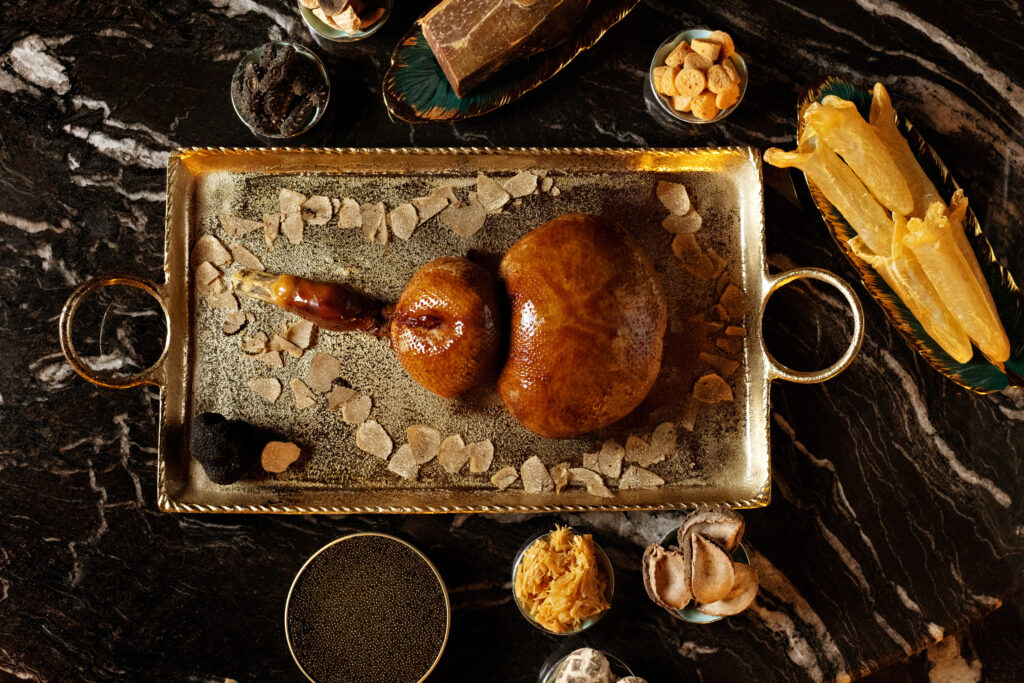
For a limited time during Toronto’s film festival season, Executive Chef Heyden Sin presents The Treasure of Fortune, an extraordinary five-course culinary experience priced at $8,888, including a 500-gram tin of caviar and the spectacular Supreme Eight-Treasure Gourd-Shaped Goose (至尊八宝葫芦鹅) on a bed of truffle as its main-course centrepiece.
Available exclusively by three-day advance order, the creation brings together two Cantonese banquet traditions alongside one of southern China’s most celebrated luxury dishes: a traditional Guangdong pigeon preparation designed to release hot broth dramatically when opened; the technique and symbolism of Eight-Treasure Duck; and the abundance of prized ingredients associated with Buddha Jumps Over the Wall.
Replacing duck with a premium whole goose, Chef Sin transforms these inspirations into an original composition filled with eight exceptional shan zhen hai wei (山珍海味), or “treasures of the mountains and delicacies of the seas.”
More than a collection of rare ingredients, The Treasure of Fortune is a story told through food.
Cinema tells stories through image, movement, performance and the vision of its director. Chinese cuisine has long told stories through ingredients, technique, symbolism, ritual and form.
This September, those two forms of storytelling meet at the table.
ONE DISH. THREE INSPIRATIONS. EIGHT TREASURES. THREE DAYS IN THE MAKING.
Every production begins behind the scenes.
For The Treasure of Fortune, the process starts with one of the most technically demanding feats in Chinese cooking. Chef Sin meticulously debones an entire premium goose by hand while preserving its skin intact. Working through limited openings without tearing the exterior, the skeleton is removed while maintaining the structure necessary to transform the bird into its eventual sculptural form.
“The difficulty isn’t simply removing every bone from the goose, it’s doing it without damaging the skin or changing the natural structure of the bird,” says Executive Chef Heyden Sin. “The skin becomes the vessel for everything that follows. We still have to fill it with the eight treasures, shape it into the húlú and take it through several different cooking techniques. If the skin is compromised at the beginning, there is no way to create the finished dish.”
THREE CULINARY INSPIRATIONS, REIMAGINED AS ONE
The Treasure of Fortune does not originate from a single recipe. Instead, Chef Sin brings together two Cantonese banquet traditions alongside one of southern China’s most celebrated luxury dishes, reinterpreting their techniques, ingredients and sense of occasion in one ambitious creation. The first draws inspiration from a traditional Guangdong preparation in which a pigeon is filled with hot broth. When the bird is opened, the soup is released from within in a dramatic tableside moment. Chef Sin carries that element of surprise into The Treasure of Fortune, creating a similarly theatrical release of the goose’s deeply flavoured juices.
The second inspiration is Eight-Treasure Duck, the traditional foundation upon which the dish is built. Chef Sin replaces the customary duck with a premium whole goose, an ingredient particularly prized in Guangdong for its fuller flavour, succulent meat and rich natural juices. For this style of preparation, goose delivers a tender, juicy result without the gamey quality sometimes associated with duck.
The third influence is Buddha Jumps Over the Wall, one of southern China’s most celebrated luxury dishes, known for bringing together an abundance of prized ingredients from mountain and sea. Its spirit informs the extraordinary treasures concealed inside the goose.
“The dish combines three major ideas,” says Sin. “We took the dramatic release of soup from the pigeon preparation, the technique and symbolism of Eight-Treasure Duck, and the luxurious ingredients associated with Buddha Jumps Over the Wall. We modified those traditions and brought them together to create something new.”
The result is not simply an elevated interpretation of one historic recipe, but an original composition drawing from distinct culinary traditions, each recognizable in its inspiration yet transformed through Chef Sin’s own point of view.
A CAST OF EIGHT, DRAWN FROM MOUNTAIN AND SEA
Inside the goose is an extraordinary cast of eight treasures.
The Four Mountain Treasures include first-harvest Tibetan cordyceps sinensis, seasonally sourced Italian white truffle, wild Yunnan black tiger paw mushroom and Tianshan snow lotus seed.
The Four Ocean Treasures include prized 15-head Japanese Yoshihama dried abalone, premium aged fish maw, wild Galapagos spiky sea cucumber, and imperial scallop with coral-grown grouper skin.
The treasures are brought together with heritage wild gourd rice and Japanese Koshihikari rice, then perfumed with long-aged chenpi.
Among ingredients selected for their rarity and extraordinary value, however, it is the mandarin peel that carries perhaps the dish’s most personal story.
A STORY PASSED FROM MASTER TO PROTÉGÉ
Before taking the helm at Lai Wah Heen, Chef Heyden Sin trained under Chef Fei, one of the most celebrated figures in contemporary Chinese gastronomy, whose restaurants have collectively earned five MICHELIN stars.
Their relationship has endured long after Chef Sin’s apprenticeship.
To this day, Chef Fei shares with his former protégé a portion of his personal reserve of long-aged chenpi (陈皮), or dried mandarin peel, which Chef Sin refers to as his master’s “mother” peel.
That same chenpi finds its way into The Treasure of Fortune.
Alongside seasonally sourced Italian white truffle, prized dried abalone and other ingredients associated with extraordinary luxury, the peel represents something considerably harder to acquire: knowledge passed between generations, an enduring relationship between mentor and protégé, and a culinary lineage connecting Chef Sin’s kitchen in Toronto to the masters who shaped him.
“Chef Fei still sends me his mother mandarin peel, and that means much more to me than simply having access to a rare ingredient,” says Sin. “It connects me to the chef who taught me and to the traditions I learned from him. To use it in a dish like this is a way of carrying that knowledge forward.”
In a dish built around the meaning of fortune, it is also a reminder that not every treasure can be measured by its price.
SHAPED FOR FORTUNE
Once filled, the goose is hand-shaped and tied into the form of a húlú (葫芦), or bottle gourd.
The silhouette is deliberate.
An enduring auspicious symbol in Chinese culture, the húlú is associated with prosperity, longevity, protection and good fortune.
The symbolism continues through the eight treasures and even the experience’s $8,888 price. The number eight is strongly associated with prosperity and good fortune in Chinese culture, making the price itself part of the story.
The goose then undergoes a meticulous multi-stage cooking process, including master-stock steaming, maltose glazing, air-drying and flash-frying before its final preparation with a concentrated abalone reduction.
The objective is a remarkable contrast: an abundant, deeply flavoured interior enclosed within crisp, shimmering, deep-mahogany skin.
The process cannot be rushed or mass-produced.
Each goose is prepared individually. Each requires three days of preparation. Each is, in effect, a commissioned culinary work.
FIVE COURSES OF RARITY AND SPECTACLE
The Treasure of Fortune extends beyond its signature goose into a complete five-course dining experience.
The $8,888 price includes all five courses and a 500-gram tin of caviar, with the Supreme Eight-Treasure Gourd-Shaped Goose serving as the evening’s main-course centrepiece.
After three days of preparation, the sculptural húlú-shaped goose makes its entrance and is presented whole at the table. When opened, its rich juices are released in a dramatic reveal inspired by the traditional broth-filled pigeon preparation of Guangdong.
The goose is then ceremonially carved, exposing the eight treasures concealed beneath its lacquered skin. Seasonally sourced Italian white truffle provides the final flourish, shaved tableside as the dish is served.
The presentation transforms the final stage of preparation into a shared moment between chef and guest, the culmination of three days of work that, much like a film, ultimately arrives before its audience as a finished creation.
AN EXCEPTIONAL VINTAGE FOR AN EXCEPTIONAL EXPERIENCE
Guests may further elevate the experience with a bottle of 1989 Château Margaux, available as an optional pairing for $3,888 per bottle.
One of Bordeaux’s original Premier Grand Cru Classé estates, Château Margaux was named a First Growth in the historic 1855 classification. Its celebrated 1989 vintage emerged from an exceptionally hot, dry growing season that produced grapes of remarkable ripeness.
Cabernet Sauvignon-led, the wine is distinguished by its richness, complexity and opulence, with floral character, smooth tannins and notes of chocolate and cinnamon. Now more than three decades into its evolution, the vintage is considered ready to enjoy while retaining the structure and concentration to continue aging.
Only two bottles will be available, making the pairing nearly as limited as the culinary experience itself.
CHINESE STORYTELLING, THROUGH A DIFFERENT LENS
The Treasure of Fortune arrives at a fitting moment.
Each September, Toronto becomes a global meeting place for cinema and the cultures and stories it carries. Chinese cinema has introduced international audiences to a rich visual language shaped by colour, symbolism, ritual, memory and tradition.
Chinese cuisine possesses a visual and symbolic language of its own.
An ingredient can represent prosperity. A shape can communicate longevity. A number can signify fortune. A recipe can preserve history. A technique can connect several culinary traditions. And an ingredient passed from mentor to protégé can carry a story across generations and continents.
The Treasure of Fortune celebrates food and film as two distinct forms of cultural storytelling, one unfolding on screen, the other at the table.
THE TREASURE OF FORTUNE
A Five-Course Culinary Experience Featuring the Supreme Eight-Treasure Gourd-Shaped Goose | 至尊八宝葫芦鹅
Price: $8,888 CAD
Includes: Five-course menu and one 500-gram tin of caviar
Optional wine pairing: 1989 Château Margaux, $3,888 per bottle
Wine availability: Two bottles only
Availability: Limited quantities during Toronto’s international film festival season
Advance order: Must be ordered three days in advance
Location: Lai Wah Heen, Toronto
Due to the sourcing of its ingredients and the extensive preparation required, extremely limited quantities will be available.
About Lai Wah Heen
Originally established in 1995, Lai Wah Heen is a Cantonese fine dining restaurant in downtown Toronto, re-imagined under owners Gary and Ming Its culinary philosophy draws on the evolution of Cantonese cuisine through trade, migration and cultural exchange, pairing traditional Cantonese technique with contemporary approaches and Canadian ingredients, including produce grown specifically for the restaurant at Dragon Farm.
Website: laiwahheen.com
Instagram: @laiwahheen
Hours of Operation
Monday – Thursday | 10:30 a.m. – 10:00 p.m.
Friday | 10:30 a.m. – 11:00 p.m.
Saturday | 10:00 a.m. – 11:00 p.m.
Sunday | 10:00 a.m. – 10:00 p.m.
Reservations can be made [HERE].
Share This Article
Related Posts
-
 #FOOD: ANTONIO BANDERAS, FAN BINGBING AND MORE AT LAI WAH HEEN DURING TIFF 2026
-
 #TIFF26: MR. WILL’S OFFICIAL 2026 TORONTO INTERNATIONAL FILM FESTIVAL PARTNERS
-
 #FOOD: LAI WAH HEEN AT TORONTO DRAGON FESTIVAL | LIVE CARVING
-
 #FOOD: TIFF 2026 PLACES TO DINE – LAI WAH HEEN, MINAMI, MIKU, 156 ONEFIVESIX, NO VACANCY, LYLA, ODD DUCK
Leave a Reply
For advertising opportunites please contact mrwill@mrwillwong.com