



9,838

Mr. Will Wong
Official Fan Page for Toronto Entertainment & Food Personality Mr. Will Wong, multi-award winning Blogger and Photographer.
X: @mrwillw
Instagram +TikTok: mrwillwong

Toronto! Are you ready for a light show? In celebration of PROJECT HAIL MARY, come on out to check out Rocky's Global Light Show Thursday night, between 9-10 PM along East Toronto Harbour!![]()
![]() Details: www.mrwillwong.com/firstlook-rockys-global-light-show-toronto-for-project-hail-mary
Details: www.mrwillwong.com/firstlook-rockys-global-light-show-toronto-for-project-hail-mary
Enter for a chance to win passes to an Advance Screening of MAYA AND SAMAR in Toronto and Montreal!![]()
![]() Details:
Details:![]() www.mrwillwong.com/mayaandsamar-2
www.mrwillwong.com/mayaandsamar-2![]()
![]() "Like" this post and tell us which city in the comments. Tag a friend you're taking with you!
"Like" this post and tell us which city in the comments. Tag a friend you're taking with you!![]()
![]() Note: Do not respond to third parties telling you that you've won. This is not us.
Note: Do not respond to third parties telling you that you've won. This is not us.
Enter for a chance to win passes to Toronto, Montreal, and Calgary to see THEY WILL LKILL YOU! Screenings are March 25, 2026.![]()
![]() "Like" this post for an entry, comment your city, and tag a friend in the comments you're bringing. Multiple entries allowed.
"Like" this post for an entry, comment your city, and tag a friend in the comments you're bringing. Multiple entries allowed.![]()
![]() Details: www.mrwillwong.com/theywillkillyou
Details: www.mrwillwong.com/theywillkillyou![]()
![]() Warner Bros. Pictures Canada release THEY WILL KILL YOU March 28, 2026.
Warner Bros. Pictures Canada release THEY WILL KILL YOU March 28, 2026.![]()
![]() Note: Do not respond to third party comments telling you that you've won. This is not us.
Note: Do not respond to third party comments telling you that you've won. This is not us.
Sitting at 90% currently on Rotten Tomatoes, Director/Writer Emma Higgins crafts an accomplished and polished debut.![]()
![]() SWEETNESS is a story about fan obsession gone horribly awry when Rylee (Kate Hallett) tries to save her self-destructive idol.
SWEETNESS is a story about fan obsession gone horribly awry when Rylee (Kate Hallett) tries to save her self-destructive idol.![]()
![]() In theatres 3.6.26 via Elevation Pictures.
In theatres 3.6.26 via Elevation Pictures.![]()
![]() #sweetness #sweetnessmovie #katehallett
#sweetness #sweetnessmovie #katehallett![]()
![]() www.instagram.com/reel/DVfWxrwDSSq/?igsh=MTZ3Z3JkNzNzaW9rcw==
www.instagram.com/reel/DVfWxrwDSSq/?igsh=MTZ3Z3JkNzNzaW9rcw==
Enter for a chance to win passes to see #ProjectHailMary starring Ryan Gosling! Screenings are in Toronto, Vancouver, and Calgary on 3.18.26.![]()
![]() "Like" this post for an entry, comment your city, tag a friend in the comments. Multiple entries allowed.
"Like" this post for an entry, comment your city, tag a friend in the comments. Multiple entries allowed.![]()
![]() Details: www.mrwillwong.com/projecthailmary
Details: www.mrwillwong.com/projecthailmary ![]()
![]() Amazon MGM Studios release PROJECT HAIL MARY 3.20.26.
Amazon MGM Studios release PROJECT HAIL MARY 3.20.26.
#SUNDANCE: “WRITING WITH FIRE”
By Amanda Gilmore for Mr. Will Wong
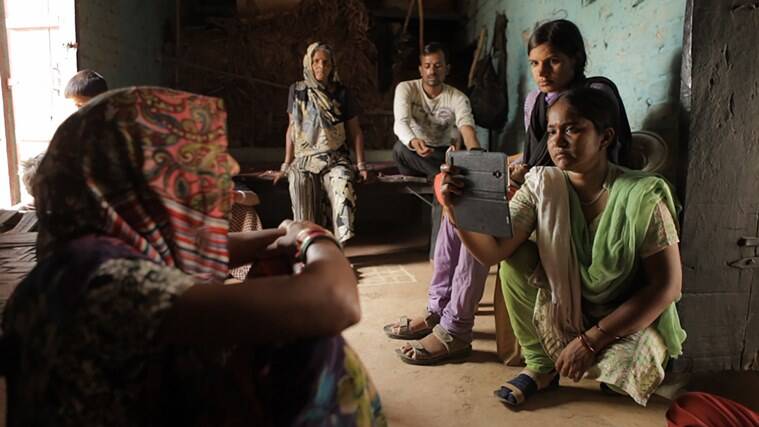
This inspiring Documentary follows the ambitious women who work at India’s only all-female news network Khabar Lahariya. We watch as this group of Dalit women switch from print to digital, armed with smartphones and invigorated to correct injustices. Their conviction and passion lead them to question their government, the caste system, patriarchy and more.
Directors Rintu Thomas and Sushmit Ghosh’s decision to focus-in on Chief Reporter, Meera, a few other reporters, makes this Documentary feel intimate. Their concentration reveals the complexity of what the women are attempting to achieve. It’s through these central journalists that audiences learn about the caste system, gendered violence, police corruption, and the notions of power within their community. Writing With Fire is a tremendous accomplishment for these debuting feature directors.
Thomas and Ghosh impressively show the journalists and Khabar Lahariya’s successes and defeats. We witness how some reporting, involving building roads and supplying electricity, led to positive changes. But we also see when their efforts are halted. For instance, their goal to change the notions of power so injustices stop happening can’t be achieved — yet — because of those who currently hold the power. But these awe-inspiring women never give up.
Regardless of how talented this Director duo are, it’s their subjects that make this Documentary a knock-out. When our heroes listen to victims of gender and caste violence, we feel sorrow. When they continue questioning a Minister even though they have been told to leave, we feel proud. When they are in unsafe situations, we fear for them. And when we get an inside look into their struggles of balancing work and home life, we root for them even more.
These Dalit, considered low caste, female journalists work tirelessly at Khabar Lahariya. They began their YouTube Channel in December of 2012. Today they have over 152 million views and 486k subscribers.
Writing With Fire is a fierce reminder that women have the strength to do anything they set their hearts and minds too. Regardless of the ‘powers’ who tell them they can’t. Because they’re the ones who are redefining what it means to be powerful.
Writing With Fire screens at Sundance:
Live Premiere: January 30 at 9 PM (EST)
On-Demand (Available for 24hrs): February 1 at 10AM (EST)
#SUNDANCE: “SEARCHERS”

By Amanda Gilmore for Mr. Will Wong
This Documentary interviews New Yorkers as they navigate online dating during the summer of 2020. Dating is difficult enough, whether using matching-making apps or doing it the old fashioned way. But then the pandemic hit and a need for human connection became even stronger. This is at the heart of Documentarian Pancho Velez’s latest.
Velez places his subjects in front of the lens as they scroll through their preferred apps. This could become dull, however, Velez inventively places the reflection of the apps screen on the lens. This technique creates audience engagement. As we see what and who they’re reacting too, we feel we are ‘searching’ with them. He also transitions between his subjects with footage of lovers around the City. These shots visualize what his subjects are looking for: connection that can make the loneliest of times beautiful.
Refreshingly, these charming subjects are diverse in their ages, races, genders, and sexual preferences. They also come from a multitude of different dating histories. Some have had success in online dating, while others have had negative experiences. Some people are new to dating, while other are divorcees. A variety of dating apps are also highlighted: Grindr, match.com, Bumble, OK Cupid and more. As Velez asks what the subjects are searching for, we see a range of answers from looking for “the one” to simply “the one for right now”.
Even Velez joins in on the online dating world. We watch as he makes a profile and, with the help of his mom, swipes left or right. We wish we could have explored more of his journey and a number of his other subjects. Throughout the many interviews, there does become a trend. They all believe online dating is part of modern times, and particularly part of life in busy New York City. But it’s looked at as a starting point and only when spending time in person can a relationship grow.
Overall, Searchers is a look at one of the loneliest times in modern history, and the need for human connection. Watching as this diverse and delightful group of New Yorkers navigate the pandemic dating world reminds us of our universal want: love.
Searchers screens at Sundance:
Live Premiere: January 30 at 9 PM (EST) On-Demand (Available for 24hrs): February 1 at 10AM (EST
#SUNDANCE: “MASS”
Review by Amanda Gilmore for Mr. Will Wong
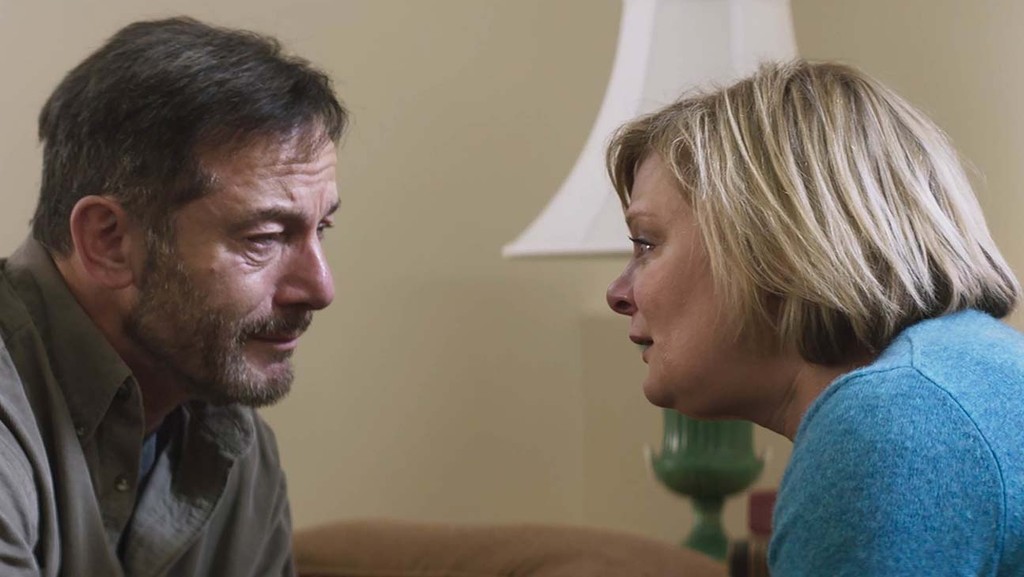
Years after a mass shooting at a high school, two sets of parents —Richard (Reed Birney), Linda (Ann Dowd), Jay (Jason Isaacs), and Gail (Martha Plimpton) — meet to discuss the tragedy. The interaction is going to be tense. Jay and Gail’s son was killed in the mass shooting by Richard and Linda’s son.
Writer-Director Fran Krantz’s debut Feature is a heartbreaking look at the aftermath of tragedy. He examines guilt, resentment and the power of forgiveness. Although Mass is set primarily in one room and has heavy dialogue throughout, it never gets boring thanks to the powerhouse Ensemble he’s assembled.
Birney is mysterious as Richard, who often denies the role mental health played in his son’s actions. He shines in a scene where he explains that parents always see the best in their children. Dowd proves, once again, why she is one of the greatest working actresses today. She gets to the heart of being a mother: her unrelenting love for her son and guilt for not seeing what he was capable of doing. Isaacs is phenomenal as the grief-ridden, yet controlled Jay. He’s particularly poignant in a scene where Jay’s emotions get the better of him. And Plimpton is a force as Gail, who will do anything to hold onto her anger because she believes it’s the only way to hold on to her son.
From the moment they’re all in the room together, a feeling of discomfort sets-in. We are introduced first to Jay and Gail, whom visibly are consumed by their grief and anger. This is a contrast to Richard and Linda, whom appear to be racked with guilt. As time progresses, the dialogue becomes increasingly truthful, exposing their humanity within. It’s when they become honest that we learn about the healing power of communication. In a world where everyone wants to talk and no one wants to listen, Krantz places us in a room with no escape and makes us listen. In doing so, he shows us how open conversation and active listening can lead to catharsis and healing.
At the start of their interaction, it feels as though the conversation has been rehearsed. They’ve had years of imagining this moment. In these scenes, Krantz holds a steady camera and makes clean cuts between his characters. Eventually, the ugliness rears its head. This is when Krantz switches to a shaky hand-held camera with quick, choppy edits between close-ups of his characters. This dramatic change punctuates his characters’ inner emotions.
Overall, Mass is an emotionally hard-hitting Film filled with four riveting performances that will leave you shaken.
Mass screens at Sundance:
Live Premiere: January 30 at 3 PM (EST)
On-Demand (available for 24 hours): February 1 at 10 AM (EST)
#SUNDANCE: “PASSING”
Review by Amanda Gilmore for Mr. Will Wong
Irene (Tessa Thompson) is an upper-class 1920s woman who lives in Harlem with her husband, Brian (André Holland), and their two sons. One day, while out at the Grand Tearoom in New York City’s Drayton Hotel, she runs into an old high school acquaintance, Clare (Ruth Negga). She finds out that Clare has been passing as white. Her ability to pass is proven as Irene learns she’s married to a white man (Alexander Skarsgård) and have children of their own. However, when Clare decides to ignite a friendship with Irene, both their lives become threatened.
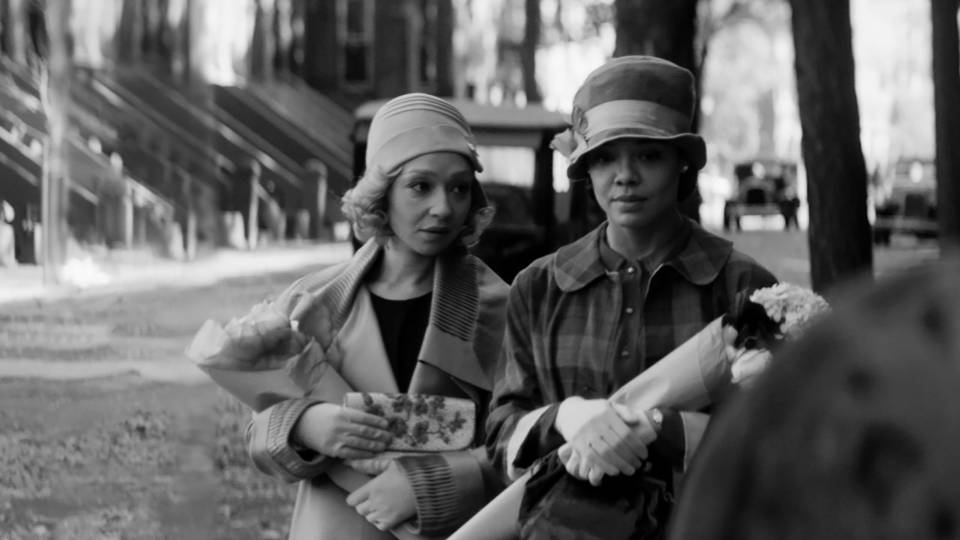
Nella Larsen’s ground-breaking Novella is brought eloquently to the screen by Rebecca Hall. She unpacks central themes of race, identity, community, repression and constructed realities all while making her Feature directorial debut a technical marvel. She shoots this quiet, Psychological Drama with the filmmaking aesthetics of the time in which the story is set. Passing is shot in Black and White, has a 4:3 Aspect Ratio, and the music mimics an era past.
Her decision to shoot in Black and White strips all colour out of this film about race. What’s left is a beautiful composition of gray frames that perfectly reflect the gray-areas of race the Film explores. Hall’s cinematographic decisions go further in her choice of Aspect Ratio. Not only does a 4:3 image create a nostalgic look of old Hollywood glamour, it also forces us to really look at the faces of the characters. This is an integral part of Passing because Thompson and Negga’s impactful performances become the focus, with scenes framed tightly around their faces. This aids in helping us see Irene and Clare’s hidden desires and restrained longing.
Furthermore, the Sound Design thrusts us into the inner turmoil these characters are facing. In addition to taking us back to 1929, the Film’s Costume Design by Marci Rodgers, help us visualize the stark contrasts between both women. Irene is constrained, she wears modest clothing and a hat that covers much of her face. While Clare is beguiling, she wears outfits that swing as she walks and a hat that’s lifted-up showing herself completely. This is compelling because Clare is the one who’s passing, yet Irene appears to be hiding.
These two characters were captivating and nuanced when Larsen wrote them in the ’20s. Thankfully, Hall has kept them richly complex, enabling Thompson and Negga to be mesmerizing in their roles. It’s rare, even today, for female friendships to be examined in Film with such intricacy. Yet, this is what’s at the heart of Passing. The two women are each missing something the other has. Passing analyzes how you can equally admire and envy a friend for something you are missing. This is a story about the duality of human beings, expressed articulately through its two leads.
Thompson gives an unbelievably expressive performance as the quiet Irene, and Negga is a magnetic presence as Clare. She shows the life Irene has conformed to and her desire to break-free of those boxes. This is where cunning Clare fills the voids in Irene. Clare longs finally to be with her community again. And this is where Irene fills the voids in Clare. Thompson and Negga have a strong, layered chemistry. The Film plays with the ambiguity of the feelings between these women. It appears that there’s something simmering beneath the surface of this friendship, but it isn’t quite known exactly what. Additionally, these Actors nail one of the most integral parts of telling a story that takes place in 1929, the diction and way of speaking. No detail is spared.
Passing is a quiet film that manages to say so much. It has a Psychological Thriller that becomes more apparent as time progresses. Hall crafts something that’s rich in technicality and highlighted by its superb performances. Its intricate Screenplay is brought to life by a Director who has a clear vision and knows how perfectly to execute it. A remarkable debut as Director by Hall.
Passing screens at Sundance:
Live Premiere: January 30 at 6 PM (EST)
On-Demand (available for 24 hours): February 1 at 10 AM (EST)
#SUNDANCE: “MA BELLE, MY BEAUTY”
By Amanda Gilmore for Mr. Will Wong
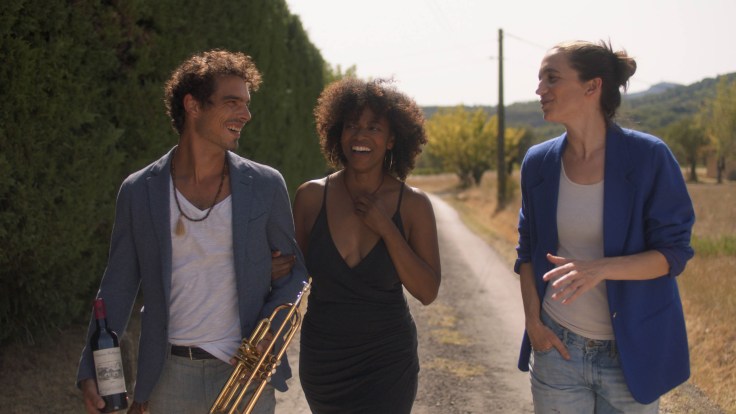
Newlywed musicians Bertie (Idella Johnson) and Fred (Lucien Guignard) are adjusting to their new life in the countryside of France. This new lifestyle is easy for Fred but Bertie is grappling with depression that’s affecting her singing. However, a change begins happening with Bertie when their former shared lover Lane (Hannah Pepper), surprisingly shows up for a visit.
Director-Screenwriter Marion Hill takes audiences through the desires of three individuals once involved in a polyamorous relationship. Thankfully, Hill doesn’t take a judging eye to the characters’ relationship. She focuses on their wants as individuals, rather than viewing them as interconnected. This gives us a look at the complexities of love along with sexual fluidity and triangulation. In doing so, Hill has created identifiable characters which have been cast expertly.
Johnson is a captivating force as Bertie. She shows Bertie’s tough exterior while exposing the vulnerability she has around Lane. During a breakfast scene, we witness Johnson change between being annoyed, angry, and sad. She then composes herself to hide Bertie’s pain. Pepper gives a great performance as the caring Lane. She keeps mystery within her character until the end. Making audiences question why Lane came back after disappearing on Bertie and Fred years ago, and what exactly she wants. Johnson and Pepper have a powerful chemistry that creates an anticipation in every scene. Their strongest moment together is when they finally have a dinner alone. Bertie feels she can’t open up to Lane, or Fred, and Lane tries to explain how Bertie has two people who love her.
When it comes to intimacy, we often consider it a physical act. However, Hill creates intimacy with words. The intimacy is through small, quiet moments where her characters are being honest with each other. Hill also takes the audience on a journey through a sun soaked summer in the south of France; with beautiful shots of vineyards, candlelit dinners, and farmer’s markets. These picturesque shots are highlighted with an intoxicating Soundtrack of acoustic guitar and jazz music by Mahmoud Chouki. It all comes together to work as a love letter to the region and complements the inner lives of the characters.
Ma Belle, My Beauty screens at Sundance:
Live Premiere: January 30 at 6 PM (EST)
On-Demand (available for 24hrs): February 1 at 10 AM (EST)
#SUNDANCE: “I WAS A SIMPLE MAN”
Review by Amanda Gilmore for Mr. Will Wong
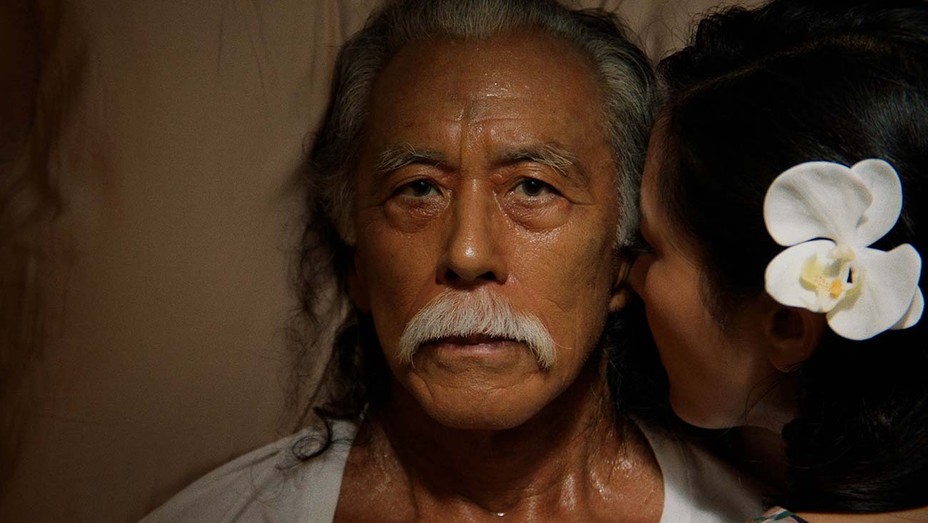
I Was A Simple Man is set on the North Shore of Oahu, Hawai’i. It follows Masao (Steve Iwamoto) and his family through three different time periods. From the pre-World War II sugar plantations of Oahu to Hawai’i statehood, to the present gentrification of Honolulu. In the present, Masao is facing his imminent death and is visited by ghosts of his past, including his wife Grace (Constance Wu).
Writer-Director Christopher Makoto Yogi’s second Feature is a quiet study of a man’s life. He uses surrealistic editing to bring audiences on a journey through Masao’s past and present. This helps differentiate the political, social and personal impacts Masao faced. In doing so, we witness an expansive look into one man’s journey through life.
Yogi has a show, don’t tell quality in his filmmaking. Rather than explain the progressions in Masao’s illness, he uses the natural landscape of Hawai’i. Before he finds out about his fatal illness, his garden flourishes. As his health deteriorates, the plants in his garden become decayed and some fruit rotted. Yogi uses the beauty of his setting to enhance Masao’s story to visualize the spiritual connection one has with their environment.
Additionally, I Was A Simple Man is a study on the emotional impacts death and loss have on families. In the past, Masao deals with his grief in a way he only knows how. In the process, he created a barrier between him and his children. In the present, his undying love for his wife and Grace’s love for him collide within his dying process. She aids him in his passage over, as his living family (daughter and grandson) come to care for him the best they can.
With minimal amounts of dialogue throughout, the cast uses restraint and movement to express their characters’ emotions. Iwamoto is captivating as a man who seems content in his diagnosis and imminent death. Tending to his plants until he is bedridden, and even then, he is in a state of calm. Wu is a powerful presence as the ghost of Grace. There’s a scene where her daughter can’t see her, and Wu tenses every muscle in her body and reaches for her in hope.
I Was A Simple Man screens at Sundance:
Live Premiere: January 29 at 3 PM (EST)
On-Demand (available for 24 hours): January 31 at 10 AM (EST)
#COOKING: SHRIMP SHAKSHUA RECIPE

Shrimp Shakshuka. “Shakshuka” is a Tunisian term for “mixture” and it is one of our favourite brunch items! Fancy, ethnic name aside this dish is incredibly delicious, comforting and real easy to make. Soft-poached eggs in crushed tomatoes, peppers and onions. Topped with some Goat Cheese. And some bread to sop it all up! While this Israeli favourite doesn’t contain shrimp normally, we’re doing it!
Ingredients:
1 28 oz can of crushed San Marzano Tomatoes
12 large shrimp
4-6 eggs
3 Roma Tomatoes, chopped
1 sweet orange pepper, seeded and diced
1/2 red onion, diced
1/4 cup Goat Cheese, crumbled
5 cloves garlic, minced
3 tbsps Cilantro, minced
1 tsp Cumin
1 tsp Paprika
2 Bay Leaves
1/2 tsp Sea Salt
1/2 tsp Black Pepper
1/4 tsp Cayenne Pepper
Olive Oil
Brioche Bread or any bread of choice
Instructions:
1. In large cast iron skillet, sautée garlic and onions in olive oil on medium-high heat.
2. Add chopped tomatoes and peppers, cool for about 3 minutes medium-high heat or until vegetables start to wilt.
3. Add crushed tomatoes, salt, pepper, cumin, bay leaves, cayenne pepper and paprika.
4. Cover and simmer 20 minutes, stirring occasionally.
5. Preheat oven at 375°F.
6. Remove skillet from heat and add cracked eggs, spacing apart evenly.
7. Add-in shrimp. Only add eggs and shrimp right before you are placing skillet in oven.
8. Bake for about 10 minutes or till egg whites are no longer transparent. Yolk should still be soft and runny.
9. Using oven mitts, remove skillet from oven. Sprinkle top with cilantro and goat cheese. Serve Shakshuka with bread and tossed salad.
Gallery:
(Photo credit: Mr. Will Wong)
#SUNDANCE: “ON THE COUNT OF THREE”

Review by Amanda Gilmore for Mr. Will Wong
Best friends Val (Jerrod Carmichael) and Kevin (Christopher Abbott) are having a tough go of it. Val is feeling out of control in his life being stuck at a job he hates and the fear of becoming a father. Kevin tried to kill himself three days ago and now sits in a psychiatric hospital attempting to convince the doctors he’s fine. When Val visits Kevin he decides to break him out. This leads to the two make a pact to end their lives by days end.
This darkly comedic debut feature from Director Jerrod Carmichael is about mental illness, a failed mental health system, the right to bear arms and a love letter to friendship. There are tonal shifts that happen within the script, written by Ari Katcher and Ryan Welch, but they work. These shifts happen while examining the past traumas of Kevin and Val and pivoting to their binding friendship. There is a brutal honesty that happens between best friends that’s often humorous. Additionally, there’s the ability to trust and confide your darkest truths in a best friend that’s impossible with anyone else. Katcher and Welch incorporate the reality of this relationship within the script and Carmichael controls the shifts on screen.
Not only does Carmichael steers this complex, layered film he also gives a strong performance. Of the two, Val is more level-headed and analytical. His decision to end his life comes from a place of recent depression and loss of control. Carmichael shows this in calculated doses, slowly exposing one layer of his character at a time. On the other hand, Kevin has had horrific trauma happen to him since childhood. A doctor who was supposed to help him, assaulted him. Whenever he has tried to get help, it hasn’t worked. This has made him feel that suicide is the only option. Abbott does a tremendous job of embodying the anguish Kevin carries and the weight of his choice. Further, he has impressive control of switching between a state of calm and unleashed anger.
Throughout, we are left wondering if the two will actually follow through with their pact. Without giving anything away, the ending leaves room for the suicide debate to be discussed. The same goes for the right to bear arms. Throughout this day-in-the-life story, Kevin references the negatives and positives of guns, which they intend to use for their pact. At moments within the script, we see the argument for guns when in a controlled setting, as in the scene at the shooting range. But we also witness the heartbreaking reality of what happens when a gun is in the hands of someone in an uncontrolled setting, this is shown multiple times throughout.
Carmichael makes an assured feature debut that tackles many controversial topics. Overall, On The Count of Three is a poignant look at mental health and the beautiful bond of friendship. It has genuine chemistry between Carmichael and Abbott. And Tiffany Haddish makes an impact with only one scene.
On The Count of Three screens at Sundance:
Live Premiere: January 29 at 9 PM (EST)
On-Demand (available for 24 hours): January 31 at 10 AM (EST)
#SUNDANCE: “JOHN AND THE HOLE”
Review by Amanda Gilmore for Mr. Will Wong
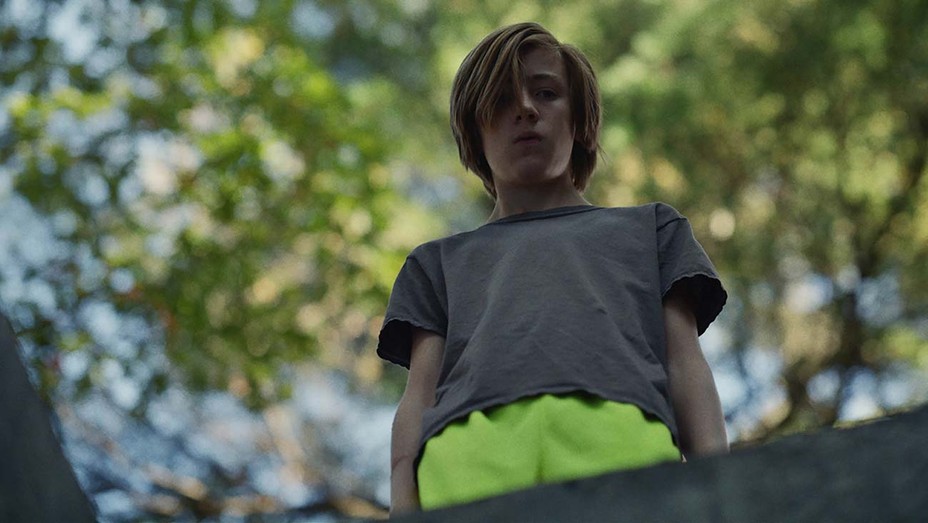
While flying his drone, 13-year-old John (Charlie Shotwell) discovers an unfinished bunker in the woods near his family’s isolated home. Without any provocation, he drugs his parents (Michael C. Hall and Jennifer Ehle) and older sister (Taissa Farmiga) and places their unconscious bodies into the bunker. While they are held captive, John heads to their home free to do what he wants.
Screenwriter Nicolás Giacobone excellently adapts his own Short Story. This haunting Psychological Thriller and coming-of-age fable is spellbinding. Giacobone examines the adolescent desire for responsibility and freedom that comes with adulthood. He shows this through John’s frightening act of holding his family hostage; while intelligently showing the immaturity of a teenage boy through impulsive spending, ignoring household tasks and testing his life through a drowning game with his friend. These often-dark scenes show there is a bigger disconnect between childhood and adulthood than responsibility.
The Script is seeping in ambiguity within scenes and characters, therefore, constantly leaving the story open for interpretation. One of Variety‘s Top Ten Directors to Watch, Pascual Sisto, makes his directorial debut with John and the Hole. Sisto heightens this ambiguity with his quiet, haunting atmosphere and grounds this unsettling tale. He creates a mood with the disorienting and sinister use of sound, designed by Nicolas Becker, that cuts right through you. Additionally, Sisto’s use of shallow-focus composition places John at the forefront of each image. This creates the necessary air of authority about this creepy adolescent.
Both Giacobone’s script and Sisto’s direction play with the concept of time. This is integral to the depravity of the act John is committing against his family. We wonder how much time has past since his family has been captive, and how long it’s been since he’s visited them. It’s in these visits, where we see him deliver food, water and clothes, where John’s compassion, or lack thereof, is examined. There are ample layers to John’s blank exterior which helps keep us intrigued and shocked throughout.
Shotwell, who we know from Captain Fantastic, is surrounded by powerhouse talent: Hall, Ehle and Farmiga. Each of them gives stunning performances that expose their privilege, compassion and fear. Yet, it’s Shotwell who is the star of John and the Hole. He gives a chilling, deep performance that has to be seen to be believed. He controls each emotion and power switch within the script and understands and visualizes John’s fixation on adulthood. He is one to watch.
Overall, John and the Hole is an eerie meditation on a child wanting to be an adult and the lengths he’ll go to experience it. It has an outstanding, breakout performance from Shotwell along with powerful performances from Hall, Ehle and Farmiga. It’s a film that will stay with viewers and be discussed for years to come.
John and the Hole screens at Sundance:
Live Premiere: January 29 at 6 PM (EST)
On-Demand (available for 24 hours): January 31 at 10 AM (EST)
#SUNDANCE: “HOW IT ENDS”
Review by Amanda Gilmore for Mr. Will Wong
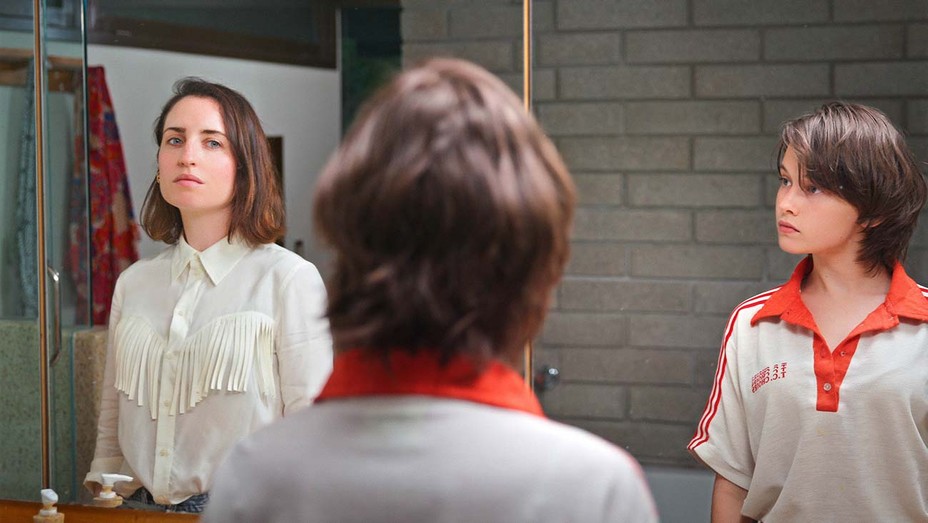
On the day an asteroid is set to obliterate the world, Liza (Zoe Lister-Jones) decides to head to a friend’s end of the world party. But before she gets there, she intends to right her regrets. With her metaphysical younger self (Cailee Spaeny) beside her, the two walk around the deserted LA Hills. Along the way, they run into strangers and friends seeing how they’re spending their last living day.
How It Ends has a funny premise and ample amounts of comedian cameos, such as Fred Armisen, Charlie Day, Nick Kroll and more. One of the greatest scenes involves Lister-Zones visiting her ‘psychic’ friend, played by Olivia Wilde. The two talk over one another in their attempt to make amends. Lister-Jones and Wilde have perfect comedic timing together and are delight to watch. However, this dramedy steers more often into drama territory rather than comedy. In these cameos there are laughs to be had. But when we are back in the central storyline there are dramatic topics discussed.
Particularly the main lesson which is learning to love yourself. This beautiful message is touchingly brought to the forefront with the sweet performances from Lister-Jones and Spaeny. The two have amazing chemistry that perfectly resembles the intimate, frustrating and funny understanding we have with ourselves. It’s Spaeny who’s the true scene-stealer as the younger, free-spirited Liza who encourages her adult-version to love and care for herself.
How It Ends is at its best while walking around the streets of LA and randomly running into strangers and friends. We witness how everyone’s idea of a perfect last day is different. Some want to do drugs, others clean and garden, some seek retribution and others perform their craft. The one thing never experimented with is the complete fear of knowing today is the day they’re going to die. Each character is in a state of calm because they knew and planned for this. But it might’ve been funny to see someone losing their minds.
Overall, How It Ends is loaded with comedic cameos and has charming performances from its co-leads.
How It Ends screens at Sundance:
Live Premiere: January 29 at 6 PM (EST)
On-Demand (available for 24 hours): January 31 at 10 AM (EST)
For advertising opportunites please contact mrwill@mrwillwong.com