



9,926

Mr. Will Wong
Official Fan Page for Toronto Entertainment & Food Personality Mr. Will Wong, multi-award winning Blogger and Photographer.
X: @mrwillw
Instagram +TikTok: mrwillwong

Enter for a chance to win run-of-engagement pass, valid for use at any Cineplex theatre, to see Taika Waititi's #KlaraandtheSun during its theatrical run.![]()
![]() "Like" this post for an entry, comment your city and tag a friend you're taking. Multiple entries allowed. You must be following.
"Like" this post for an entry, comment your city and tag a friend you're taking. Multiple entries allowed. You must be following.![]()
![]() Details: mrwillwong. com/klaraandthesun
Details: mrwillwong. com/klaraandthesun![]()
![]() @sonypicturescanada release KLARA AND THE SUN 10.23.26.
@sonypicturescanada release KLARA AND THE SUN 10.23.26.![]()
![]() @thetarogroup
@thetarogroup![]() @klaraandthesunmovie
@klaraandthesunmovie![]()
![]() #WIN #KLARAANDTHESUN #GIVEAWAY #JENNAORTEGA
#WIN #KLARAANDTHESUN #GIVEAWAY #JENNAORTEGA
Enter for a chance to win passes to an Advance Screening of WICKER in Toronto on 10.21.26.![]()
![]() Details: mrwillwong. com/wicker
Details: mrwillwong. com/wicker![]()
![]() "Like" this post and tag a friend you're taking in comments. Multiple entries permitted.
"Like" this post and tag a friend you're taking in comments. Multiple entries permitted.
Enter for a chance to win a digital download of SPIDER-MAN: BRAND NEW DAY! AVAILABLE ON DIGITAL OCTOBER 6, 2026 AND ON 4K UHD, BLU-RAY & DVD DECEMBER 15, 2026.![]()
![]() We are giving away digital copies of the #1 domestic movie of all time!
We are giving away digital copies of the #1 domestic movie of all time!![]()
![]() "Like" this post for an entry, tagging 1 friend who loves SPIDER-MAN as much as you!
"Like" this post for an entry, tagging 1 friend who loves SPIDER-MAN as much as you!![]() Multiple entries allowed. Codes are for use in Canada only. You must be following.
Multiple entries allowed. Codes are for use in Canada only. You must be following.![]()
![]() Details: mrwillwong. com/spidermanbrandnewday2/
Details: mrwillwong. com/spidermanbrandnewday2/![]()
![]() #SpiderMan #SpiderManBrandNewDay #win
#SpiderMan #SpiderManBrandNewDay #win

tiff
#TIFF23: “WOMAN OF THE HOUR” REVIEW
By George Kozera
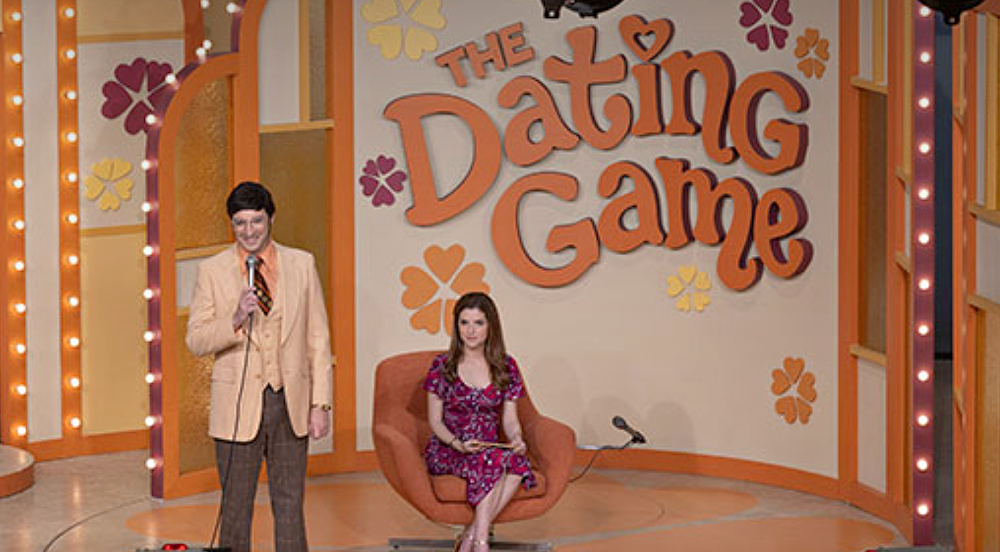
To be perfectly frank, I had some trepidations and resisted seeing Anna Kendrick’s feature film directorial debut with WOMAN OF THE HOUR. When the subject matter deals with rape, a serial killer and is based on a true story, I would assume that even the most seasoned filmmakers would think twice about tackling such sensitive topics and I questioned whether Kendrick had the gravitas and skill to undertake such a project. I need not have worried. Not only has this Oscar-nominated Actress fashioned a formidable and accomplished thriller, she skillfully blends in flashback sequences as well as addressing women having to deal with misogynistic, toxic males, all the while she laces the Movie with some much-needed humour and thrills.
Kendrick plays Cheryl, a struggling actress whose agent books her work as a contestant on the popular television game show “The Dating Game” where she will have to question three gentlemen then choose one to go on a date, depending on how they answer her queries. Contestant Number Three is Rodney Alcala, a Photographer (a star-making role and performance from Daniel Zovatto). We have already seen him at his worst as WOMAN OF THE HOUR opens with Alcala brutally pushing his victim to the ground, strangle her before resuscitating then raping her (Kendrick shows amazing restraint filming this intense sequence). We also know that Alcala has extraordinary b.s. skills as we saw him tell one victim that he studied at NYU Film School with Roman Polanski and a group of men in an office environment that he partied with Warren Beatty.
After a technical mishap during the filming of the game show, Cheryl rewrites all the insipid questions and makes all three males squirm uncomfortably with their answers, except for Alcala who is quite proficient with saying just the right things. Cheryl chooses Rodney and they win a trip to Carmel. After the taping, we see Alcala wait in the parking lot of the TV studio, see Cheryl leave and charmingly suggests they go nearby for a cocktail to which she accepts the invitation.
That is when the Film brims with tension.
It’s best to see WOMAN OF THE HOUR without knowing the particulars of this true story. Ignorance of the facts will be bliss. Kendrick’s mastery in the Director’s chair is in full force as I did have all the information beforehand and still sat in my seat, shaking with anxiety and dread. KUDOS.
WOMAN OF THE HOUR screens st TIFF ’23:
Saturday, September 9, 9:00PM, Scotiabank
#TIFF23: “DEATH OF A WHISTLEBLOWER” REVIEW
By David Baldwin
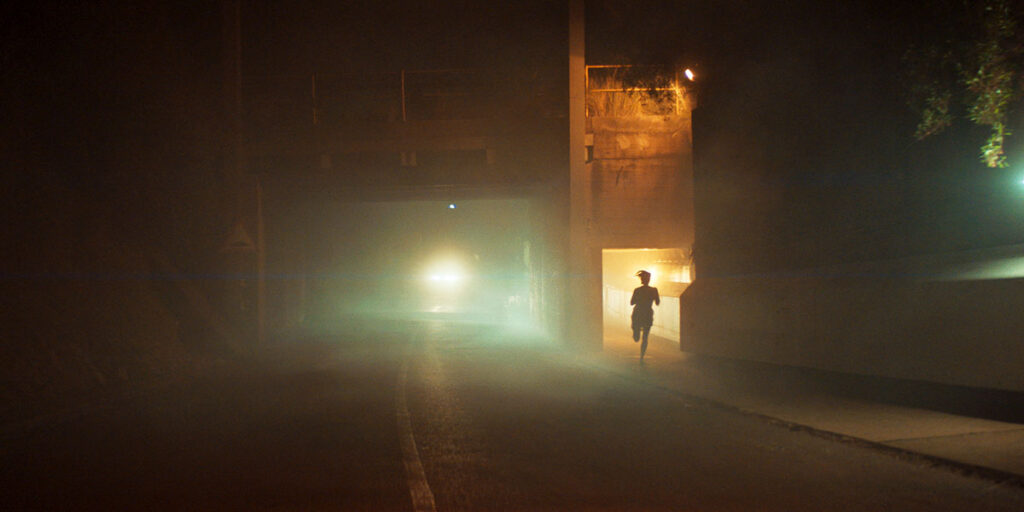
Luyanda Masinda (Noxolo Dlamini) is a South African investigative journalist who just watched her friend be murdered as he sat right beside her. He had been telling her about a story he was working on involving deep government corruption and secret chemical warfare tests dating back several decades. Luyanda starts digging to learn more about what he was researching and quickly finds herself in way over her head.
DEATH OF A WHISTLEBLOWER is a Political Thriller with a lot on its mind. It plays in the conspiracy space for a large chunk of the Film, extrapolating on genocide and apartheid allegories and the nose-to-the-grindstone brand of journalism exemplified by Oscar-winners like All the President’s Men and Spotlight. It becomes more horrifying and harrowing than I expected, made worse by the fact that this fictional film is very much based in truths of what actually happened – and continues to happen. The cinéma verité-style cinematography drives that point home and will keep you breathless for the first two acts.
Where the Film goes off the rails is in the third act, when it turns into a gritty revenge picture that bares little resemblance to the Film proceeding it. It is over-the-top and nowhere near as pulse pounding, trading real-world horror for something substantially more bombastic. I nearly lost the plot from the tonal whiplash. I do not fault Director Ian Gabriel nor his screenwriting team for making the pivot – as the Film is pretty explicit about what happens after the truth is exposed. I just wish it was more grounded. Thankfully, the Cast makes up for this, all uniformly solid no matter their length of screentime, Dlamini in particular. She soars through the Film, commanding your attention at every turn. The Film asks a lot of her and she more than delivers on it.
DEATH OF A WHISTLEBLOWER screens at TIFF ’23:
Saturday, September 9 at 2:45 PM at TIFF Bell Lightbox
Sunday, September 10 at 9:40 PM at Scotiabank Theatre Toronto
Sunday, September 17 at 3:00 PM at Scotiabank Theatre Toronto
#TIFF23: “SWAN SONG” REVIEW
By George Kozera
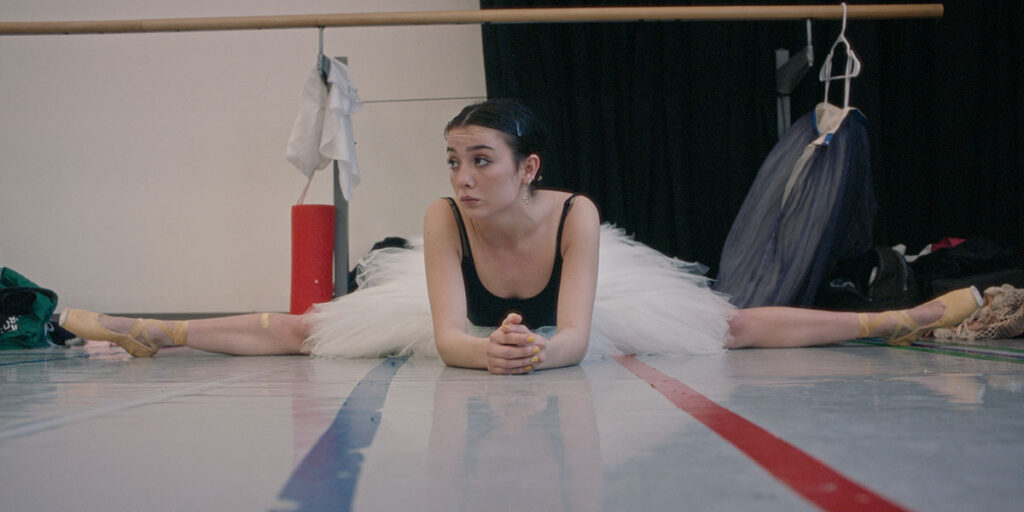
After a 50-year career with the National Ballet of Canada (first as a dancer then as the company’s Artistic Director), Prima Ballerina Karen Kain chose Swan Lake as her retirement project. Under the skillful eye of Director Chelsea McMullan, SWAN SONG is an intimate and fascinating Documentary that takes the viewer into the world of Ballet; an artform that gets the cinematic short shrift when compared to other entertainment-based industries. Actress Neve Campbell has signed on as Executive Producer.
Karen Kain has been in the public eye since she received worldwide acclaimed for her performance in Swan Lake in 1971. Her ease and demeanour in front of the camera is impeccable, engaging the audience with the minutiae of choreographing and directing a classic piece. There also is an acknowledgment of the racial diversity within the ballerinas, and a decision for them not to wear the traditional pink tights but show their skin colours. I particularly loved Kain’s story of how Rudolf Nureyev whisked her off to a party where she was overwhelmed with being in the centre of celebrities and bowls of cocaine then taken aside by Andy Warhol who made her pose a certain way, snap a Polaroid and ultimately making her the first Canadian to be immortalized on canvas by the Artist.
Kain is not the only focal point of SWAN SONG. Many young ballerinas talk about their dreams, insecurities, triumphs while we watch their gruelling rehearsals and preparations. The insight provided the Principal Ballerina for this production of the Ballet, Jurgita Dronina, is invaluable as it graphically shows us the toll dancing takes on the body.
I was transfixed throughout SWAN SONG and will admit to shedding a few tears of awe and wonderment.
SWAN SONG screens at TIFF ’23:
Saturday, September 9 at Roy Thomson Hall, 2PM
Monday, September 11 at TIFF Bell Lightbox, 8:30PM
Friday, September 15 at Scotiabank, 1PM
#TIFF23: “HIS THREE DAUGHTERS” REVIEW
By Amanda Gilmore
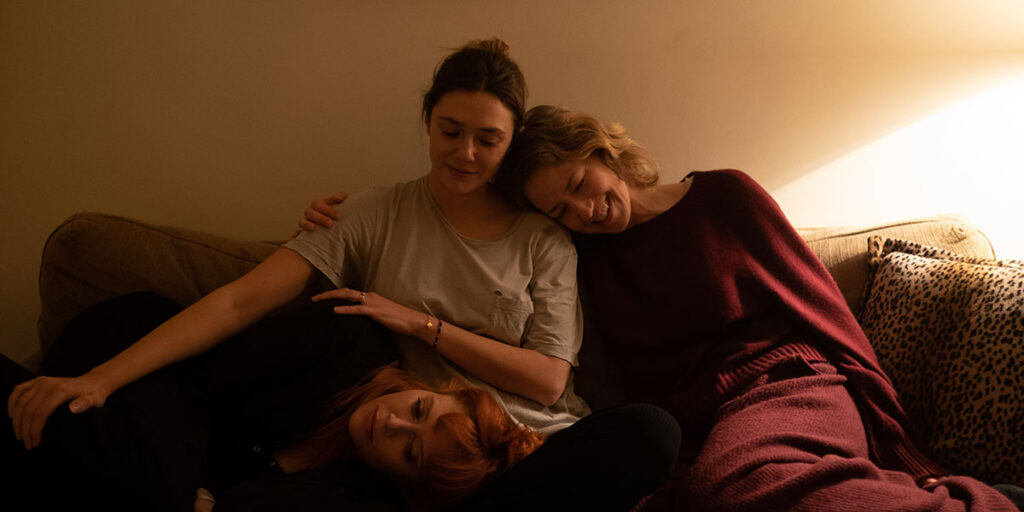
Acclaimed Writer-Director Azazel Jacobs delivers a moving portrait of the complexities within sibling dynamics with His Three Daughters. The story follows three sisters, the eldest Katie (Carrie Coon), middle Rachel (Natasha Lyonne) and the youngest Christina (Elizabeth Olsen) who coverage to care for their father when his health declines.
Jacobs heartbreakingly captures the feeling of being in limbo while watching a loved one slowly die before your eyes. It’s the mental state of grieving something that hasn’t yet completely gone. Jacobs’ meticulously written and distinct characters handle this state of being in different ways. And it’s clear from the first shot that His Three Daughters is like attending a masterclass in acting.
Coon’s captivating performance as the tense Katie speaks a mile a minute and is quick to judge any matter. She’s constantly at the throat of Rachel who’s been the one living and caring for their ill father a year before his health took a turn for the worse. Lyonne delivers a nuanced performance as the middle sister who’s quietly carried her pain alone. Then there’s the quirky Christina who attempts to maintain her internal peace while appearing to be on the verge of breaking down. Olsen gives one of her finest performances to date.
The Script is loaded with monologues that showcase the powerhouse talent Jacobs has assembled which causes His Three Daughters to feel ‘stagey’ at times. But it’s these performances that enthral the viewer into the story. An affecting story that examines the bonds between siblings and how grieving takes many shapes and forms.
His Three Daughters screens at TIFF ’23:
Saturday, September 9 at 12 PM at Visa Screening Room at the Princess of Wales Theatre
Sunday. September 10 at 2:45 PM at Scotiabank Theatre Toronto
Sunday. September 17 at 5:30 PM at Scotiabank Theatre Toronto
#TIFF23: “SUMMER QAMP” REVIEW

By George Kozera
SUMMER QAMP take the audience to Camp fYrefly in rural Alberta, where queer, non-binary, and trans teens can spend a few days hanging out and just getting to be kids together “without any of the explanations.” As a group, these young adults are boisterous, adventurous and just thrilled to be in a safe environment where they won’t be judged or bullied; but in their one-on-one interviews with the Director Jen Markowitz, they are more subdued and reflective. They talk about their gender dysphoria, gender identity and sexuality issues with insight and honesty. They are also young. I had to giggle when one participant said they wanted to be either “a criminal justice lawyer or a film director.”
SUMMER QAMP is primarily a talking heads Documentary, and it must be commended for showing a world that may be foreign to some but I think the Director tried to tackle too many issues, some successfully and some redundant. I wish Markowitz had included more teenagers from different ends of the LGBTQ+ spectrum. I found myself vacillating between fascinated and bored.
SUMMER QAMP screens at TIFF ’23:
Saturday, September 9 at 12:15 PM at Scotiabank
Sunday, September 10 at 4:30 PM at Scotiabank
#TIFF23: “BACKSPOT” REVIEW
By David Baldwin
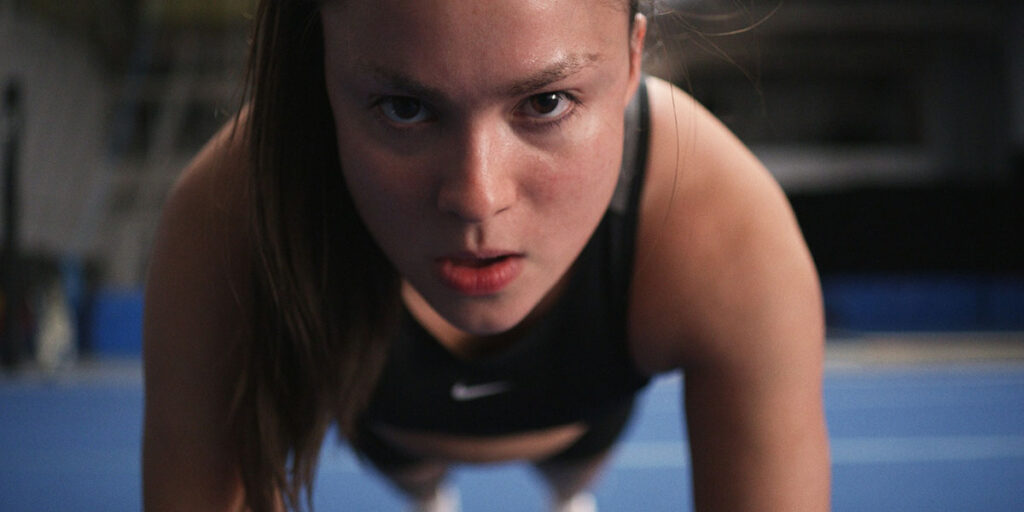
Cheerleaders Riley (Devery Jacobs) and her girlfriend Amanda (Kudakwashe Rutendo, TIFF Rising Star ’23 and Share Her Journey Fellow) have just been selected to be part of an elite cheer squad. With a major competition coming up – not to mention needing to impress ice cold head coach Eileen (Evan Rachel Wood) – there is no room for either of them to mess up this opportunity. And Riley is starting to buckle under that pressure.
I am not a gymnast, nor have I ever tried to be. Thankfully, that does not matter because Director D.W. Waterson (in their feature-length debut) does everything they can to make it so that you feel all of the pain, excitement and fear Riley feels from start to finish. The camera is always moving, taking in Riley’s experiences, amd honing in frequently on shots utilizing a Go-Pro to really embed deep into her psyche. When she starts having a panic attack, you feel it with her. When she starts pulling out her eyebrow hairs, you feel it with her. It is frequently disorientating and intense, but that is deliberate. Waterson is not so much making BACKSPOT into a film so much as they are making a visceral experience.
Jacobs is revelatory here, excelling equally at the physical and emotional elements of her character. She dives fearlessly into every moment, with the extreme close-ups on her face brilliantly depicting the toil this training is having on her. Her innocent, intimate connection with Rutendo is terrific, as are the standard coming-of-age tropes Riley finds herself falling into. Where the Film falters is in what is happening in the background of Riley’s home life, and more specifically her school work. We only get to see fragments of it or nothing at all, with everything that is not just gymnastics (including Shannyn Sossamon’s thankless performance as Riley’s Mom) kind of fading into the background. The number of scenes taking place at Cineplex Mississauga gave me a giggle though.
All of that said, Wood is the Film’s not-so secret weapon. She relishes at playing such a fiendish and nasty character. But when Riley and Amanda refer to her as middle-aged, despite being in her mid-30s? That innocuous, throwaway of a line hit me square in the gut. I am not sure I will ever forget it.
BACKSPOT screens at TIFF’ 23:
Friday, September 8 at 8:30 PM at TIFF Bell Lightbox
Monday, September 11 at 3:00 PM at TIFF Bell Lightbox
Friday, September 15 at 9:45 PM at Scotiabank Theatre Toronto
#TIFF23: “GONZO GIRL” REVIEW
By Amanda Gilmore
Patricia Arquette makes her feature debut with Gonzo Girl the adaptation of Cheryl Della Pietra’s semi-autobiographical novel chronicling her time as Hunter S. Thompson’s personal assistant.
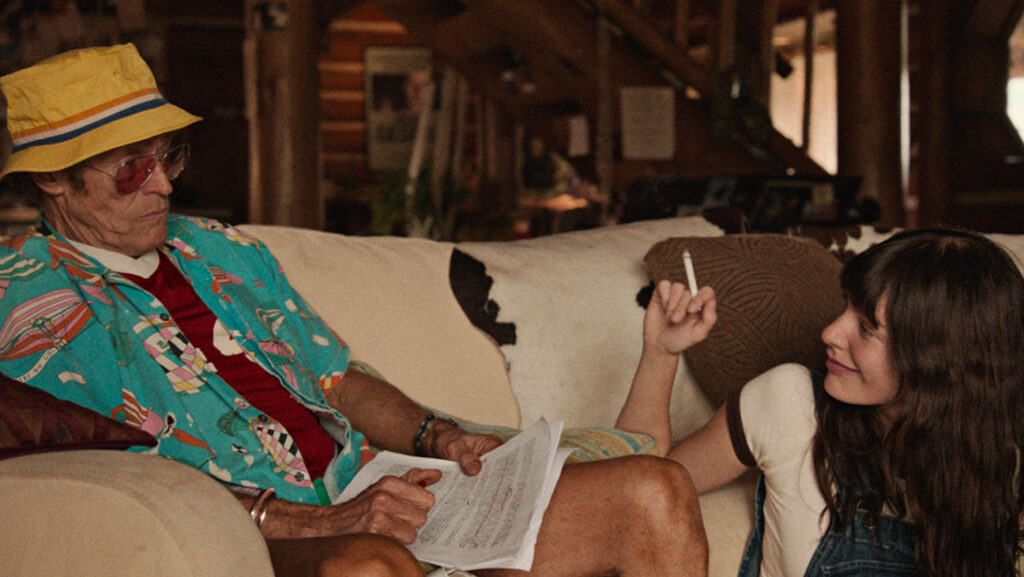
Set in 1992, we follow Alley Russo (Camila Morrone) who’s been hand-picked to be the assistant to the father of gonzo journalism, Walker Reade (Willem Dafoe). It’s been 15 years since Walker’s written anything decent. He’s more interested in consuming cocaine, acid and alcohol than sitting down and writing. Getting him to finish his latest novel is what Alley’s hired to do.
Gonzo Girl is a fast-paced, bold trip through the few months Alley spends with Walker. Arquette and screenwriters Rebecca Thomas and Jessica Caldwell focus on Alley. Allowing the audience to see this man and the women around him, his girlfriend Devaney (Elizabeth Lail) and long-term manager Claudia (Arquette), through her eyes.
Everything she sees is spellbindingly brought to the screen by cinematographer Bobby Bukowski. When Alley first takes acid, he brings us into the world as she sees it. Filled with animation and walls pulsating. Even when no drugs are being taken, Bukowski uses the lens to capture the bizarre world Alley is now a part of, such as seeing the room through the reflection of Water’s sunglasses.
At the centre of Gonzo Girl are two powerhouse performances from Dafoe and Morrone. Dafoe gives a controlled yet outlandish performance as Walker. With a filmography loaded with best performances, his take on Walker will stand near the very top. Rising talent Morrone gives a firecracker performance as Alley who learns more about herself and steps into her independence.
Gonzo Girl screens at TIFF ’23:
Thursday, September 7 at 8:45 PM at Royal Alexandra Theatre
Friday, September 8 at 5:30 PM at Scotiabank Theatre Toronto
Saturday, September 16 at 3 PM at TIFF Bell Lightbox
#TIFF23: “DUMB MONEY” REVIEW
By Mr. Will Wong
Based on the book THE ANTISOCIAL NETWORK by Ben Mezrich, Director Craig Gillespie (Cruella, I, Tonya) is back with DUMB MONEY, based on the true story of GameStop‘s unbelievable meteoric rise in share price during the Pandemic. This thanks to a Reddit page called r/WallStreetBets, leading a legion of novice investors to band together against two hedge fund giants banking on GameStop to short and disappear into the oblivion. This is a real David vs. Goliath battle that balances what’s at stake for everyone involved, yet at once is educational.
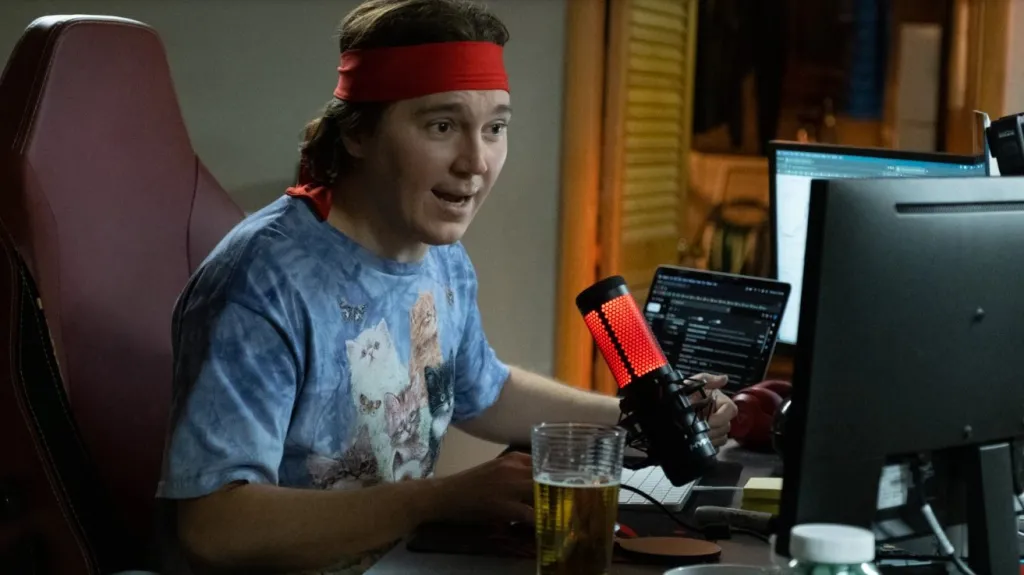
We meet Roaring Kitty/Keith Gill (Paul Dano), a charismatic internet personality who believes wholeheartedly in the potential of GameStop. Through his internet videos, he leads the charge propelling GameStop from just a few dollars a share to $400 a share at its peak, as his supporters and investors become further invested in this fight against those who hold power. An uproar results when trading on GameStop shares suddenly are halted. As allegations of insider trading surface, Gill finds himself in a fight for everything he has built and accomplished, with he and his opponents in high places likewise, ready to risk it all.
Dano is fantastic in Keith’s unwavering in his belief of what is right, even if this all seems a little crazy. He is very easy to root for and Gillespie reins the focus in on his true intention. It is never only about money, it is about winning the fight against the big guys who bank on bankrupting the little guys. Shailene Woodley as Keith‘s wife Caroline, also is a standout acting as his support when the tides begin to turn for the worse. Pete Davidson also delivers a memorable turn as Keith’s younger brother Kevin, navigating humorous and more tender moments well.
DUMB MONEY screens at TIFF ’23:
Friday, September 8
Roy Thomson Hall 5:45 PM
Premium
Sunday, September 10
Roy Thomson Hall 10:30 AM
#TIFF23: “CHUCK CHUCK BABY” REVIEW

By David Baldwin
Helen’s (Louise Brealey) life did not turn out the way she expected. She lives in a room at her (ex?)husband’s home with his new girlfriend, their new baby, and his dying mother Gwen (Sorcha Cusack). Helen cares for Gwen during the day and works nights at the local chicken processing plant. She is thrown out of sorts however when her former neighbour and high school crush Joanne (Annabel Scholey) returns to town.
What follows is an often whimsical love story between two women who refuse to be defined by their past traumas. Did I mention that the characters in the Film have a habit of breaking out into song whenever one of their favourite tunes comes on? That just seems to be the world Helen and Joanne inhabit in CHUCK CHUCK BABY, Writer/Director Janis Pugh’s debut narrative feature. She infuses the proceedings with a sense of wonder, and continually uses floating chicken feathers as a motif in and out of the plant (which somehow seems less grueling than it should). She also does a great job balancing the Film’s cuteness and humour with its fiercely feminist undertones. Some moments might be slighter than others, but I just wish Pugh did not stray away so quickly whenever something dark is added into the mix.
The lead pair of Brealey and Scholey are terrific from start to finish. Their chemistry is off the charts and the intimacy and love they bring to their burgeoning relationship is a delight to watch. They do just as well in their more dramatic moments, ensuring the audience feels every ounce of pain and regret they do. The Supporting Cast around them is solid with Cusack as the clear standout. She gets many of the film’s most profound moments and does an exemplary job landing its most emotional beats. Anytime she popped up, it felt like a warm hug you did not want to pull away from.
CHUCK CHUCK BABY screens at TIFF ’23:
Friday, September 8 at 3:15 PM at Scotiabank Theatre Toronto
Sunday, September 10 at 6:45 PM at Scotiabank Theatre Toronto
Saturday, September 16 at 8:45 PM at Scotiabank Theatre Toronto
#TIFF23: “I DON’T KNOW WHO YOU ARE” REVIEW

By David Baldwin
Benjamin (Mark Clennon, TIFF Rising Star ’23) has not been having the best night. His new boyfriend Malcolm (Anthony Diaz) rejected his sexual advances, and the party he attends afterwards dredges up memories best forgotten. He stumbles home drunk, makes a bad decision and ends up being sexually assaulted by a random stranger. Benjamin thankfully does not contract HIV, but needs to start taking PEP immediately to prevent it potentially coming later. He does not have health insurance though, nor the $900 he needs to buy the drugs outright.
All of this happens in the first twenty minutes of I DON’T KNOW WHO YOU ARE, and the next hour or so is spent watching Benjamin frantically race to collect as much money as he can from his “friends” in order to pay for the PEP treatment. We learn choice details about Benjamin along the way, alongside the highs and lows of the people orbiting around him. It is episodic in a sense, yet feels gritty, harrowing and authentic – the side of Toronto that only its less wealthy residents know exists.
While it left me with a few questions (like why the Film suggests there is only one shabby pharmacy anywhere near Benjamin’s apartment), I found Writer/Director M.H. Murray’s direction to be confident and assured. He has a steady hand and crafts a film that even veteran directors would find challenging to create. It has its flaws yet makes for a bold and audacious feature debut; one that suggests Murray will be a talent to keep our eyes on.
Even better is Clennon, also making his feature debut, whose terrific performance alternates between riveting and aggravating. He spends much of the Film silent, using his eyes and emotions to guide Benjamin’s frightening journey. It makes for a number of great character moments, and tells us more than words ever could. It is a star-making turn no doubt, and is complemented by rock solid supporting work from Diaz and Nat Manuel who plays his friend Ariel. I wish they both had more to do, but when you are being overshadowed by a towering performance like Clennon’s, maybe having less to do is not so much of a bad thing.
I DON’T KNOW WHO YOU ARE screens at TIFF ’23:
Thursday, September 7 at 9:30 PM at TIFF Bell Lightbox
Friday, September 8 at 10:00 PM at TIFF Bell Lightbox
For advertising opportunites please contact mrwill@mrwillwong.com