


So honoured to be nominated a fourth time for a Sovereign Award by the @JockeyClubofCAN. Win or lose, it's so great to be recognized. What a great group to be included in with @SantinoD1994, @AssiniboiaDowns's Jason Halstead and @woodbinephotos.
https://www.bloodhorse.com/horse-racing/articles/290329/mitchell-rollins-among-media-sovereign-award-finalists

9,837

Mr. Will Wong
Official Fan Page for Toronto Entertainment & Food Personality Mr. Will Wong, multi-award winning Blogger and Photographer.
X: @mrwillw
Instagram +TikTok: mrwillwong

Did you miss the NIRVANNA THE BAND THE SHOW THE MOVIE Pop-up at The Rivoli today? ![]()
![]() Great news, it's back for an encore tomorrow beginning noon till sold-out! Do not delay!
Great news, it's back for an encore tomorrow beginning noon till sold-out! Do not delay!![]()
![]() Our Justin Waldman and Nicholas Porteous checked it out and here is what to expect.
Our Justin Waldman and Nicholas Porteous checked it out and here is what to expect.![]()
![]() #NirvannaTheBandTheShowTheMovie is now in theatres.
#NirvannaTheBandTheShowTheMovie is now in theatres.![]()
![]() Elevation Pictures
Elevation Pictures ![]()
![]() www.instagram.com/reel/DVC3jWiDEOJ/?igsh=MXNtcnYxNTlkdWQ1cg==
www.instagram.com/reel/DVC3jWiDEOJ/?igsh=MXNtcnYxNTlkdWQ1cg==![]()
![]() #ntbtstm #toronto
#ntbtstm #toronto
Enter for a chance to win passes to a screening of Maggie Gyllenhaal's THE BRIDE in Montreal and Vancouver. ![]()
![]() "Like" this post for an entry and comment your city. Tag a friend you're bringing. Multiple entries allowed.
"Like" this post for an entry and comment your city. Tag a friend you're bringing. Multiple entries allowed. ![]()
![]() Details: mrwillwong.com/thebride
Details: mrwillwong.com/thebride![]()
![]() Note: Do not respond to third party comments telling you that you've won. This is not us.
Note: Do not respond to third party comments telling you that you've won. This is not us. ![]()
![]() *We are working on some Toronto passes. Stay tuned*
*We are working on some Toronto passes. Stay tuned*
happy lunar new year!! hoping all your wishes come true in the year of the horse. 🐴❤️![]()
![]() beanie and Daddy
beanie and Daddy![]()
![]() www.instagram.com/reel/DU3U_EgAcu0/?igsh=dTFqNXJzZDBtcm0z
www.instagram.com/reel/DU3U_EgAcu0/?igsh=dTFqNXJzZDBtcm0z
Enter for a chance to win a copy of eight-time Academy Award-nominated HAMNET, by Director Chloé Zhao.![]()
![]() In stores 3.3.26 in 4k UHD, Blu-ray, and DVD.
In stores 3.3.26 in 4k UHD, Blu-ray, and DVD.![]()
![]() "Like" for an entry, and tag 1 friend in the comments who wants to see HAMNET. Multiple entries allowed.
"Like" for an entry, and tag 1 friend in the comments who wants to see HAMNET. Multiple entries allowed.![]()
![]() Note: Do not respond to third-party comments saying that you've won. This is not us.
Note: Do not respond to third-party comments saying that you've won. This is not us.
Chatting Toronto lunch recos and the complex edits in acclaimed Comedy-Adventure NIRVANNA THE BAND THE SHOW THE MOVIE, with Matt Johnson and Jay McCarrol.![]()
![]() Elevation Pictures release #NirvannaTheBandTheShowTheMovie in theatres 2.13.26.
Elevation Pictures release #NirvannaTheBandTheShowTheMovie in theatres 2.13.26.![]()
![]() www.instagram.com/reel/DUY2OYeASe4/?igsh=ZmFuM21yYTN0NnJu
www.instagram.com/reel/DUY2OYeASe4/?igsh=ZmFuM21yYTN0NnJu
Protein and Muscle Recovery: What Actually Works for Repair and Growth
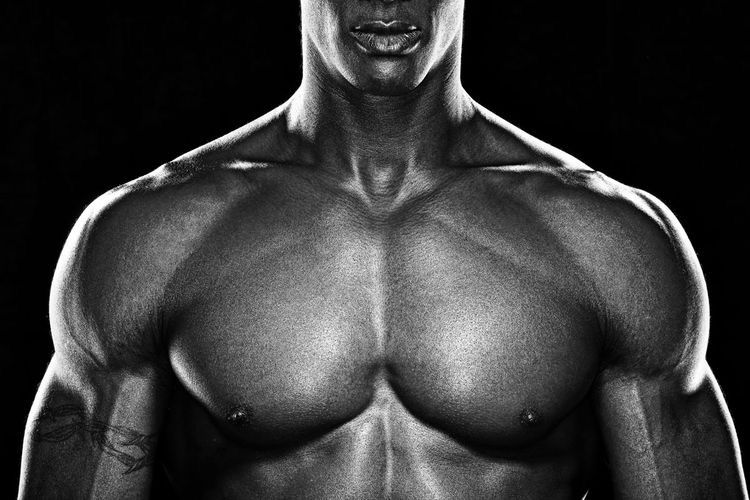
Every lifter knows protein matters. Eat your chicken. Drink your shakes. Hit your macros.
But protein is not just about grams per day. How you consume it, when you consume it, and what else you do around it determines whether those grams actually translate to muscle repair and growth.
Let’s break down what protein actually does for recovery, how much you really need, and why some people recover faster than others—even with identical diets.
What Protein Actually Does for Recovery
When you train, you create microscopic damage in muscle fibers. This damage is not bad—it is the stimulus for growth. But for growth to happen, your body needs raw materials.
Protein provides amino acids, which:
Repair torn muscle tissue
Support collagen synthesis for tendons and ligaments
Fuel immune function (which takes a hit after hard training)
Maintain nitrogen balance (anabolic state)
Without adequate protein, your body cannot complete the repair cycle. You remain in a catabolic state longer, recover slower, and potentially lose tissue instead of gaining it.
The basic math: Training breaks down muscle. Protein rebuilds it. No protein, no rebuild.
How Much Protein Do You Actually Need?
This is where internet arguments start. Some say 1g per pound of bodyweight. Others claim 0.8g is enough. Who is right?
The evidence-based answer:
| Goal | Protein Intake (per kg bodyweight) |
| Sedentary maintenance | 0.8g |
| General fitness | 1.2-1.6g |
| Muscle building (natural) | 1.6-2.2g |
| Muscle building (enhanced) | 2.0-2.5g |
| Cutting (calorie deficit) | 2.2-2.6g |
Why enhanced lifters need more: Anabolic steroids increase protein synthesis rates. More synthesis requires more raw materials. If you are on cycle and eating like a natural, you leave gains on the table.
The practical takeaway: A 90kg lifter on cycle should target 200-220g protein daily. That is not a suggestion. It is the minimum required to match accelerated synthesis rates.
Timing: Does the Anabolic Window Matter?
The “anabolic window” concept has been debated for years. Some say you need protein within 30 minutes post-workout. Others claim total daily intake matters more.
Here is the balanced view:
Post-workout (immediate):
Your muscles are insulin sensitive
Blood flow is elevated
Amino acid transporters are active
Glycogen stores need replenishment
Verdict: Getting 30-40g fast-digesting protein (whey isolate) within 2 hours post-workout is beneficial. The “30-minute” rule is overblown for most, but the “2-hour” window is real.
Pre-bed:
Overnight fasting lasts 7-9 hours
Muscle protein synthesis continues during sleep
Casein (slow-digesting) provides steady amino acid release
Verdict: 30-40g casein or mixed meal before bed supports overnight recovery.
The rest of the day:
Spread protein across 4-6 meals. This maintains positive nitrogen balance and prevents prolonged catabolic states.
Protein Quality: Not All Grams Are Equal
Complete proteins contain all nine essential amino acids. Animal sources dominate this category:
Eggs (gold standard reference protein)
Whey and casein (dairy)
Chicken, beef, fish
Soy (plant-based complete protein)
Incomplete proteins lack one or more essential amino acids. Most plant sources fall here, but combining them (rice + beans) creates a complete profile.
Leucine is the trigger. This specific amino acid activates mTOR, the pathway that signals muscle protein synthesis. Meals should contain at least 2-3g leucine to maximize response.
| Food | Leucine per 100g |
| Whey isolate | ~10g |
| Chicken breast | ~1.7g |
| Eggs | ~1.4g |
| Beef | ~1.8g |
| Soy | ~1.6g |
The takeaway: Prioritize leucine-rich sources, especially post-workout.
Beyond Protein: What Else Affects Recovery?
Protein is essential, but it does not work alone. Several factors determine whether those amino acids actually become muscle tissue.
Sleep
Growth hormone pulses during deep sleep. Cortisol declines. Protein synthesis peaks. Without adequate sleep, even perfect nutrition falls short.
Target: 7-9 hours. Consistent timing. Dark, cool room.
Hydration
Muscles are 70%+ water. Dehydration impairs protein synthesis, increases cortisol, and slows nutrient transport.
Target: 3-4 litres daily minimum. More if training hard or using orals.
Stress Management
Chronic stress elevates cortisol. Cortisol is catabolic — it breaks down muscle for energy. Managing stress through light cardio, meditation, or simply scheduling rest days is not optional.
Training Volume
More training is not always better. Excessive volume creates systemic fatigue that impairs recovery capacity. Listen to your body, not your ego.
Why Enhanced Lifters Recover Faster
Here is the reality that natural lifters find frustrating:
Anabolic steroids directly improve recovery.
They do this by:
Increasing protein synthesis rates
Reducing muscle breakdown (anti-catabolic effect)
Enhancing glycogen resynthesis
Improving nitrogen retention
Lowering cortisol activity
This is why enhanced lifters can:
Train more frequently
Use higher volumes
Recover from injuries faster
Maintain muscle in a deficit
But — and this is critical — enhanced recovery requires enhanced nutrition. The same steroids that boost synthesis also increase demand for raw materials. Under-eating protein on cycle is like putting race fuel in a car and never pressing the accelerator.
The Muscle Gear Connection
You may have noticed that fitness influencers on YouTube and Instagram recover suspiciously fast. They train with extreme intensity, high volume, and minimal rest — and still grow.
Some are genetic outliers. Some use sophisticated programming.
Some use steroids.
This reality leads many natural lifters to search for “how to buy steroids in Canada” or “best steroid source.” They want the recovery advantage they see demonstrated online.
Muscle Gear has served this community since 2012. Fourteen years of providing pharmaceutical-grade anabolics to Canadian customers. Approved distributor of Apoxar, Novo-Pharm, and NeoSARMS.
If you are considering that path, the principles remain the same:
Testosterone first, not Trenbolone
Bloodwork before, during, and after
Ancillaries on hand before starting
Protein intake matching enhanced synthesis rates
Complete PCT
The gear enables faster recovery. The protein provides the building blocks. You provide the discipline.
Practical Protein Strategies
For natural lifters:
1.6-2.0g per kg daily
30-40g per meal, 4-5 meals
Prioritize post-workout and pre-bed
Leucine-rich sources at each meal
For enhanced lifters:
2.0-2.5g per kg daily
40-50g per meal, 5-6 meals
Post-workout window is non-negotiable
Consider adding EAA or leucine supplements
Monitor nitrogen balance through recovery quality
Sample day (90kg enhanced lifter):
| Meal | Food | Protein |
| Breakfast | 4 eggs + 150g egg whites | 45g |
| Snack | 200g Greek yogurt | 20g |
| Lunch | 250g chicken + rice | 55g |
| Pre-workout | 40g whey isolate | 35g |
| Post-workout | 50g whey isolate + carbs | 45g |
| Dinner | 250g lean beef + potatoes | 55g |
| Pre-bed | 250g cottage cheese | 30g |
| Total | 285g |
The Bottom Line
Protein is not complicated, but it is non-negotiable. Whether you train naturally or with pharmaceutical assistance, amino acids are the literal building blocks of muscle tissue.
The rules are simple:
Eat enough total protein
Spread it across the day
Prioritize leucine-rich sources
Time it around workouts and sleep
Support it with sleep, hydration, and stress management
If you are enhanced, the stakes are higher. Your body builds muscle faster—but it also demands more raw materials. Under-eating protein on cycle is not just suboptimal. It is wasteful.
Muscle Gear has provided the tools for enhanced recovery since 2012. The protein part—that is still on you.
Recovery is a system. Protein is one input. Make sure it is adequate.
Share This Article
Related Posts
Leave a Reply
For advertising opportunites please contact mrwill@mrwillwong.com